



In the Gold, Moak, Schaenen, and Class of 1953 Galleries, Floor 2L
Long celebrated as an exotic locale, Bali is a tiny, predominantly Hindu island that teems with activity in the Indonesian archipelago. But its perpetual “hum of life” (senandung hidup) is not as orderly or harmonious as tourist literature would have us believe.
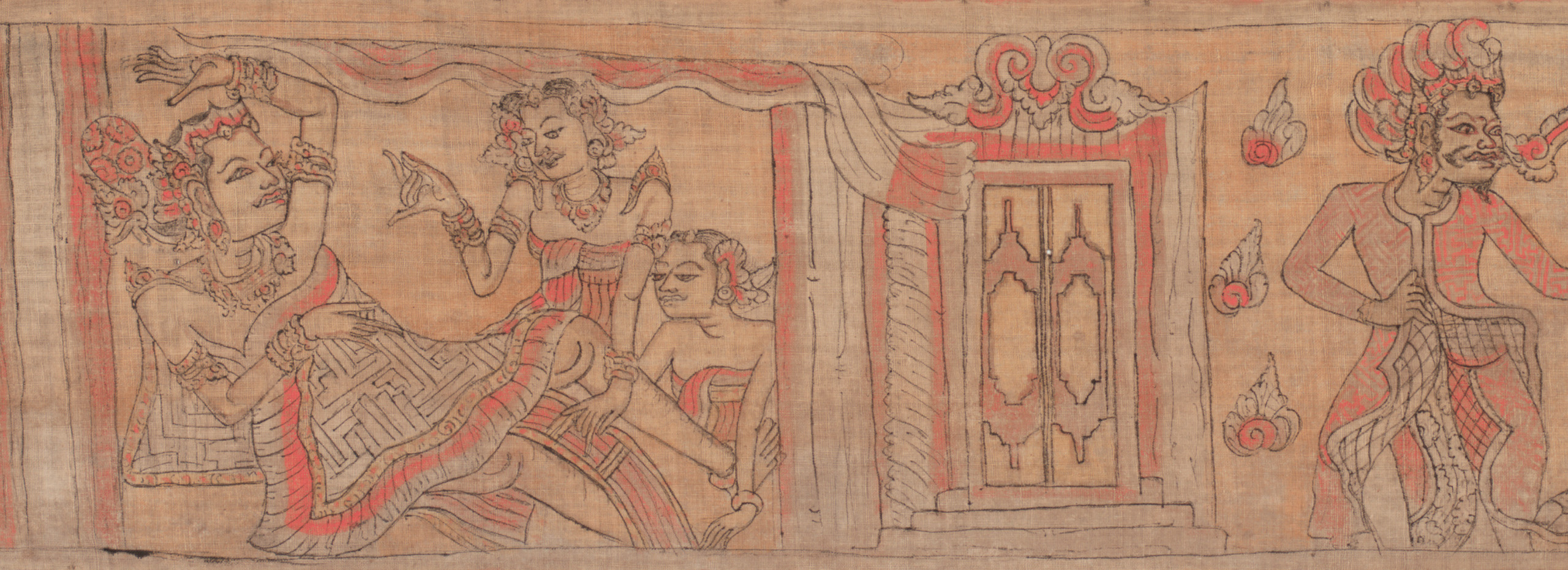
Tantri is a vibrant case in point. In a detail (shown above) from an ider-ider (a long, narrow cloth hung under the eaves of a shrine), Tantri is shown gesturing elegantly to the reclining king, who she entertains with a tantalizing story night after night, in the Balinese version of the Thousand and One Nights. The elaborately carved Balinese door to the right of the scene serves as a threshold to the collection of stories that await.
Balinese paintings, textiles, shadow puppets, masks, and sculptures reveal a multitude of narratives, from Tantri’s imaginative tales to the heroics and moral lessons of the Hindu epics Ramayana and Mahabharata, to the gendered relationships, humor, and magic of local Indonesian stories. They also detail aspects of daily life in Bali in which storytelling, performance, and religious practice intertwine.
Nearly three decades of collecting Balinese art at the Johnson Museum are celebrated in this exhibition. That collection has been made possible in large part by the unfolding history and reputation of Cornell’s Modern Indonesia Project, founded in the 1950s, and generous donations to the Museum from scholars of Southeast Asian studies, their families, and their students.
Twenty years ago, the Museum acquired a significant collection of Balinese story cloths and shadow puppets from anthropologist Joseph Fischer that have become an important resource for teaching the history of Balinese art, along with other textile gifts.
Claire Holt (1901–1970), who taught at Cornell in the 1960s and wrote the groundbreaking Art in Indonesia: Continuities and Change, was described by her Cornell colleague George Kahin as a quintessential teller-of-tales. He was inspired from his ongoing conversations with Holt to collect Balinese paintings, including on his 1967 honeymoon in Bali with his wife, Audrey Kahin, MA 1976, PhD 1979, who recently donated them to the Johnson Museum.
Holt also gave artworks to friends and students, most notably the distinguished Cornell professor Benedict R. O’G. Anderson, who donated many of those gifts along with dance masks he acquired during his own fieldwork in Indonesia, and the Tantri ider-ider.
These are just some of the relationships involved in bringing the artworks in this exhibition together—relationships formed not solely between persons, but touched by the masterful telling of tales and the material objects themselves. The king repeatedly says to Tantri, “Continue your story!” As this exhibition reveals, there are as many Tantris as there are tales to tell.
This exhibition was curated by Kaja McGowan, Associate Professor of the History of Art and Visual Studies, and Ellen Avril, Interim Director and the Judith H. Stoikov Curator of Asian Art at the Johnson Museum, and supported in part by the Helen and Robert J. Appel Exhibition Fund and the Alan and Betsey Harris Exhibition Endowment.
A corresponding installation in the Museum’s Southeast Asia gallery on the fifth floor will be curated by students in “Performing Indonesia,” the Spring 2026 Curatorial Practice seminar.
Selected Artworks

Ritual preparations for a cremation
I Made Sekar
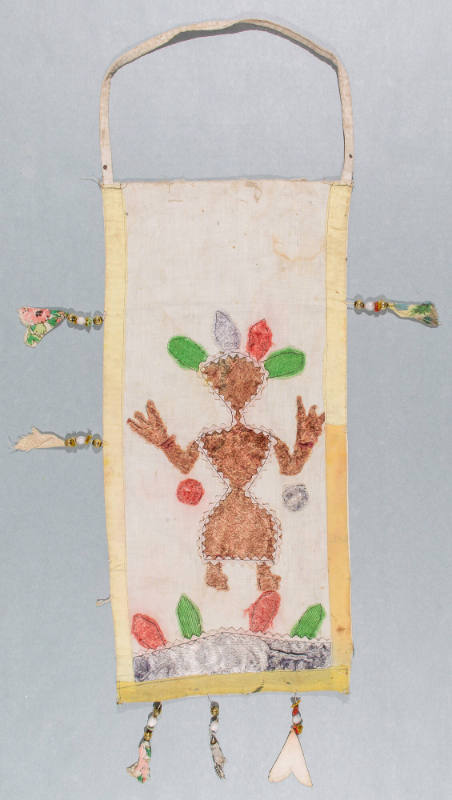
Offering cloth (lamak) depicting Cili
Bali, Negara
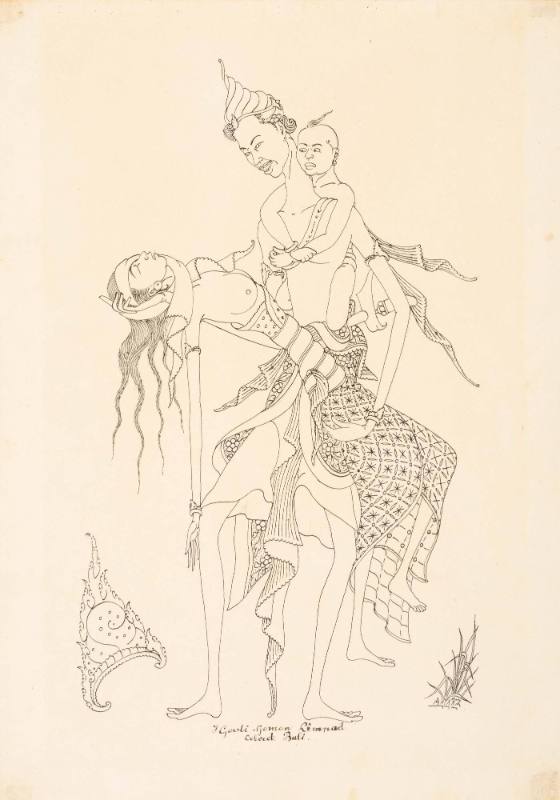
Siladri carries the body of his wife Kadek, a scene from the Journey of Dukuh Siladri
I Gusti Nyoman Lempad

Shadow puppet representing Rangda
Indonesia, Bali
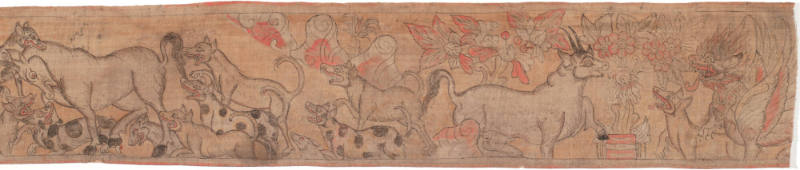
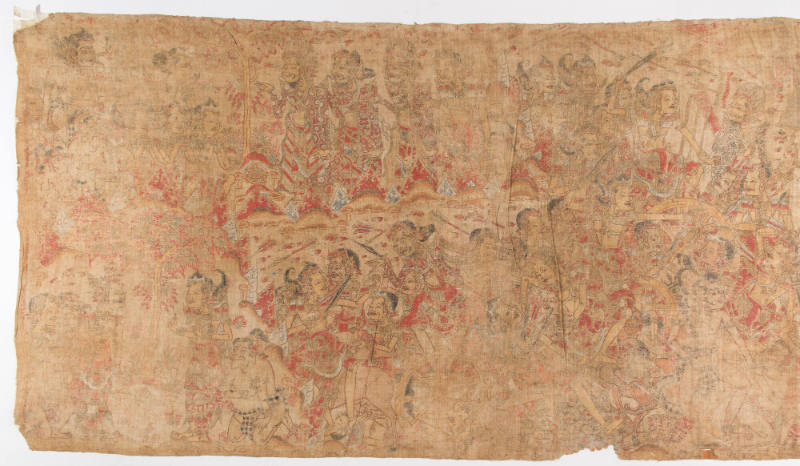
Eave hanging (ider-ider) with scenes from the Baratayuda (Great Battle) from the Mahabharata
Indonesia, Bali

Palintangan calendar
Indonesia, Bali, Kamasan
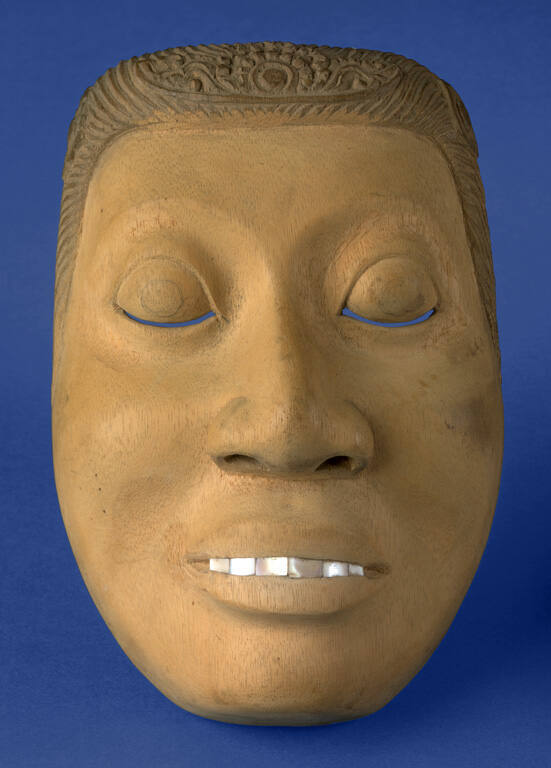
Unpainted mask of the Refined Prince, Dalem
Ida Bagus Madé Poleng