


In the Picket Family Video Gallery, Floor 2L
Bridging design, architecture, and city planning, Patricia Johanson (1940–2024) created artworks and public spaces that connect people and the earth, reckoning human presence with care of the environment. Active from the 1960s until her death, Johanson worked in a cultural landscape that was ever fraught with concerns about the environment and the apathy of civic leaders and the public toward it.
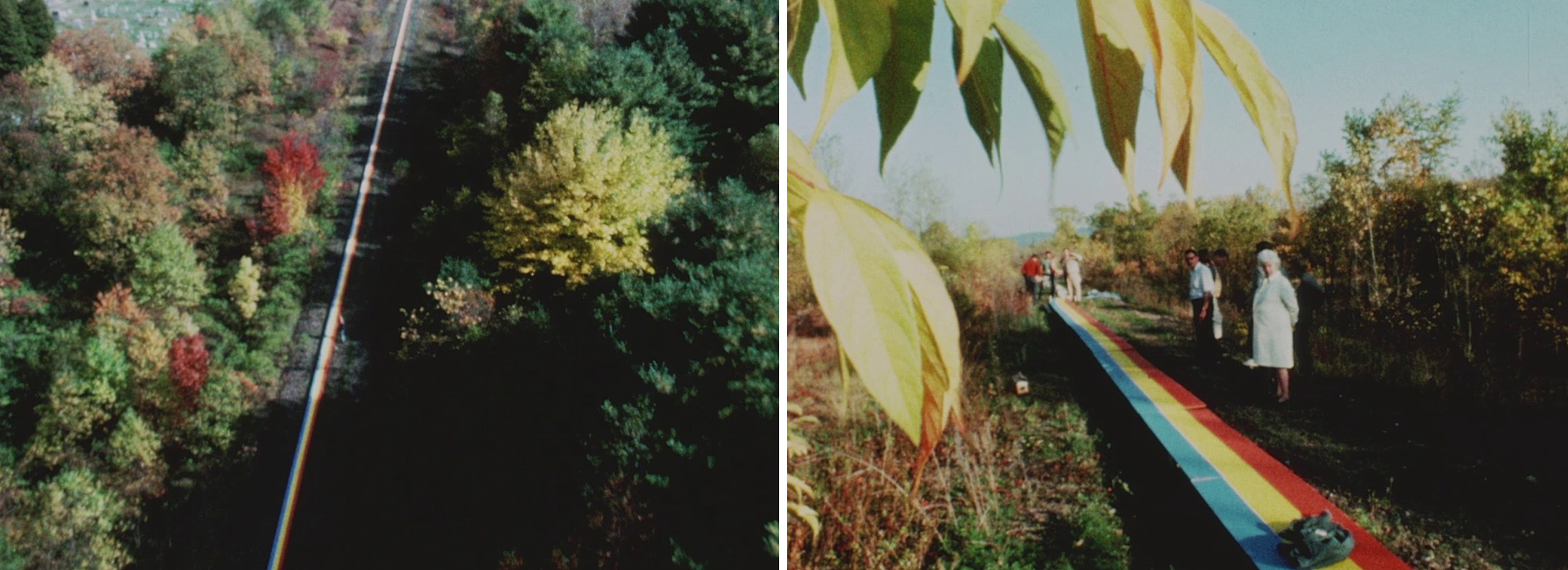
Made just a year before Cornell’s own vanguard Earth Art exhibition, Stephen Long (1968) was one of Johanson’s first large-scale projects, in which she installed a 1,600-foot strip of painted planks along an abandoned railway in Buskirk, New York, outside of Albany. The piece is named after an Army engineer known for developing the steam engine and exploring the Great Plains. The work not only underscores the role of railways in US expansion but also comments on rail transportation’s effect on our perception of landscape, seen at high speeds and from far remove.
The earthwork was only on view for two days but filmed for public television, even appearing on Walter Cronkite’s CBS Evening News. The film’s camerawork echoes Johanson’s interest in the relationship between her art and the landscape—in getting a wide-angle shot, the shadow of a helicopter hovers over autumnal leaves, again emphasizing the tense boundary between nature and the man-made.
While many artists of this early period of land art, particularly men, were interested in cutting, marring, and leaving lasting impressions in the earth itself, Johanson stood out in her commitment to revitalizing disconnected systems and, in her words, ensuring that “the worm and the person are on equal footing” in all of her designs.
—Annie Abernathy, curatorial assistant
Works on View

Stephen Long
Patricia Johanson
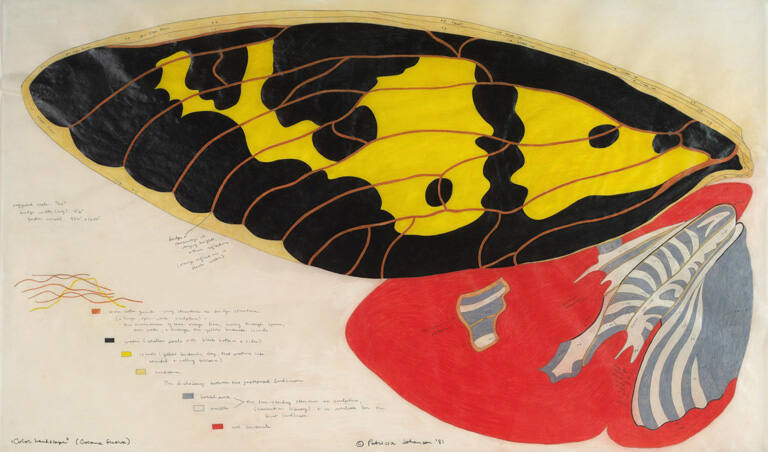
Color Landscape (Gaeana Festiva)
Patricia Johanson