

Object Details
Culture
Roman (provincial, Palmyrene )
Date
ca. 150 – 200 A.D.
Medium
Carved and polished limestone
Dimensions
Height: 11 3/4 inches (29.8 cm)
Credit Line
Harold L. Bache, Class of 1916, Memorial Endowment Fund
Object
Number
72.021
An oasis in the Syrian desert, Palmyra was a main stop along the caravan route that brought luxuriou(…)
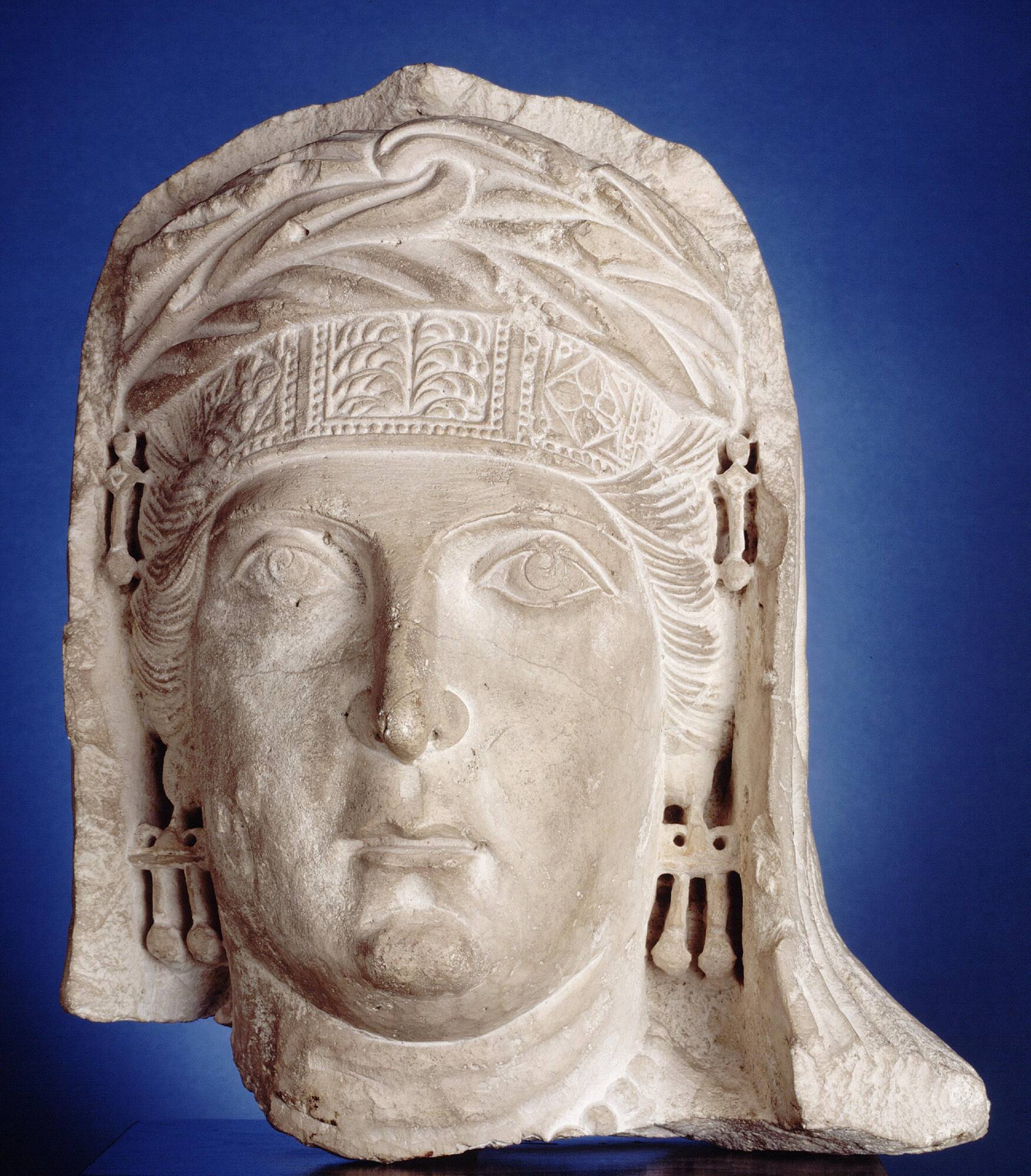
An oasis in the Syrian desert, Palmyra was a main stop along the caravan route that brought luxurious merchandise from the Orient to the Roman world. Palmyra was annexed to Roman Syria and its citizens were granted independence in many matters. However, in 273 Zenobia, Queen of Palmyra, challenged Rome for control over the eastern part of the Roman Empire, and Palmyra was destroyed by Roman troops. Palmyrene citizens placed sculpted figures in family tombs located outside the city. This sculpture is striking both as portraiture and as decoration, reflecting the mixture of Roman and Near Eastern heritages of the city. The head, factual and stern, is typically Roman, but the large almond-shaped eyes with heavy lids and the abbreviated eyebrows reflect the abstracting tendencies of Near Eastern art. This portrait would have been placed on the outside of a compartment, called a cubiculum, holding the remains of the person portrayed; four or five cubicula were usually arranged in a row, one above the other, inside a large tomb. (From “A Handbook of the Collection: Herbert F. Johnson Museum of Art,” 1998)