






Object Details
Culture
Indonesia, Bali, Tenganan
Date
ca. 1900–50
Medium
Cotton, double ikat
Dimensions
59 × 13 1/2 inches (149.9 × 34.3 cm)
Credit Line
Gift of Wanda Warming and Michael Gaworski
Object
Number
2018.057.011
Mystery surrounds the origins of Balinese geringsing, although some cloths display the unmistakable (…)
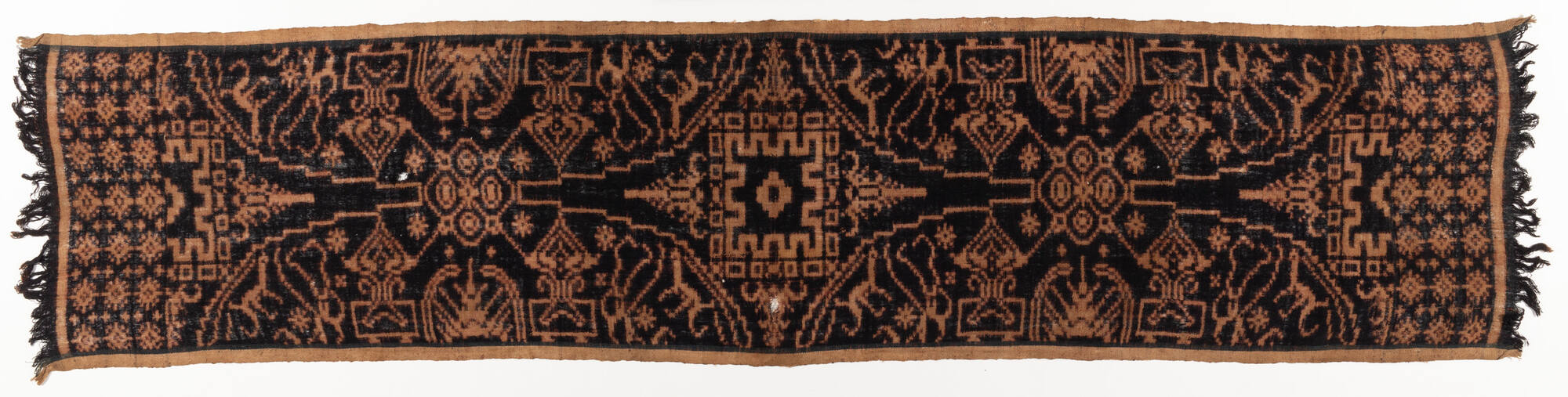
Mystery surrounds the origins of Balinese geringsing, although some cloths display the unmistakable influence of patola, the silk double-ikats produced in Gujarat, India, which circulated throughout the Indonesian archipelago from about the sixteenth century. Patelikur isi is the sacred name of this geringsing, referring to the twenty-four bundles of warp threads required to weave the cloth. The pattern features three large four-pointed star mandala, accompanied by smaller multitiered shrines and stupa shapes, signifying a woven cosmos. Tenganan Pegeringsingan in East Bali is the only village in Indonesia where women still produce double ikat cloth on backstrap looms. These sacred cloths and their closely guarded complex patterns are believed to have been taught to the women of the village by the god Indra. Geringsing are considered to have protective powers—gering means “disease” and sing means “no.” They are used to assist in healing, exorcism, and ceremonies surrounding birth and death.