




Object Details
Culture
Tibet
Date
ca. 1700
Medium
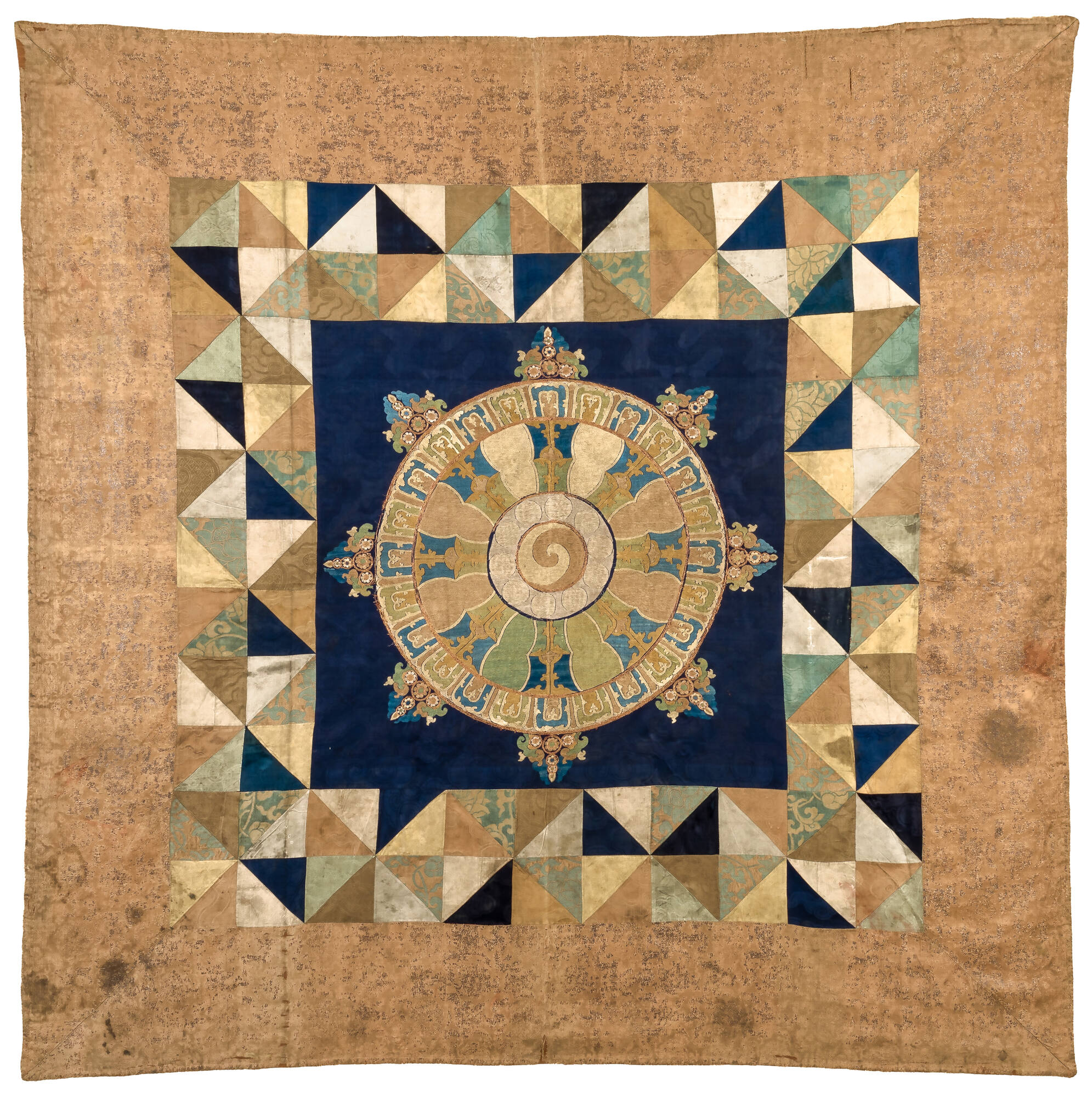
Silk, damask weave, patchwork and embroidery
Dimensions
Approx.: 59 1/4 × 58 5/8 inches (150.5 × 148.9 cm)
Mount: 62 1/4 × 62 3/8 × 1 inch (158.1 × 158.4 × 2.5 cm)
Credit Line
Gift of Younghee Kim-Wait, in memory of her father, Captain Hak Yong Kim
Object
Number
2017.012
The main design of this textile consists of the wheel of the Dharma (the Buddhist teaching), an appr(…)
The main design of this textile consists of the wheel of the Dharma (the Buddhist teaching), an appropriate motif for its function as an altar cloth or throne cloth during a lama’s lecture or ceremony. The importance of the practice of systematic learning and contemplation are further reflected in the symbols that form the wheel. These include the yin-yang pattern in the center, representing enlightenment as the perfect balance of wisdom and compassion, and the ten circles standing for the ten stages of the bodhisattva’s progress toward Buddhahood. The wheel’s eight spokes represent the eightfold path consisting of right view, right intention, right speech, right livelihood, right action, right effort, mindfulness and meditation. The lotus blossom formed of twenty-four petals symbolizes purity, Buddhahood and the notion that the Buddha’s teaching comes originally from the fully opened heart of perfect enlightenment. Patchwork in the Buddhist context symbolizes the patched garments worn by the historical Buddha as a rejection of material wealth and commitment to asceticism. In Himalayan Buddhist practice, the multiple colors assembled into the patchwork can also refer to various levels of spiritual and psychological consciousness.