




Object Details
Artist
Leo Villareal
Date
2012
Medium
White LED lights, custom software, electrical hardware, and metal
Dimensions
67 feet, 6 inches x 44 feet, 4 inches
Credit Line
Acquired through the generosity of Richard Baker, Class of 1988, and Lisa Baker
Object
Number
2012.056
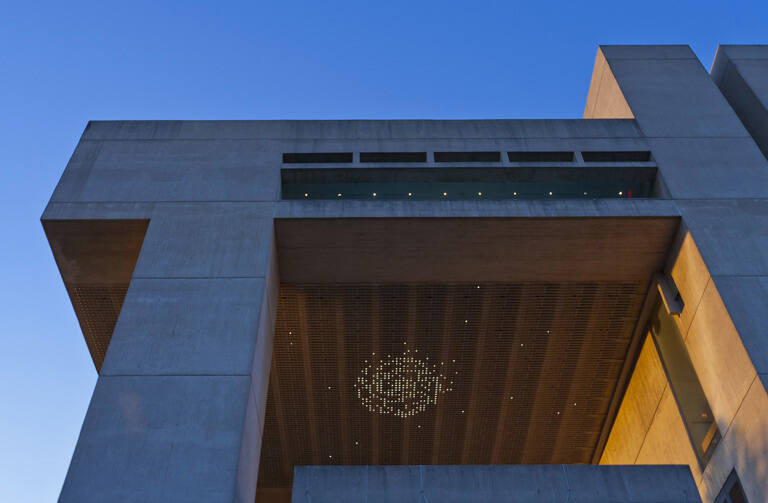
Cosmos debuted at the Johnson Museum on October 22, 2012. Visible day and night with ever-cha(…)
Cosmos debuted at the Johnson Museum on October 22, 2012. Visible day and night with ever-changing patterns, visitors can access the second-floor sculpture court during the warmer seasons.
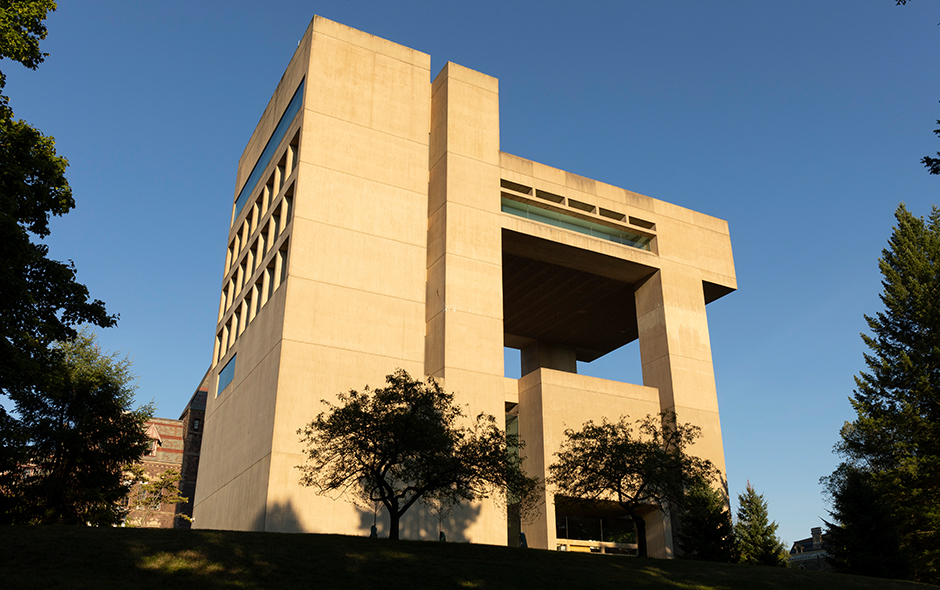
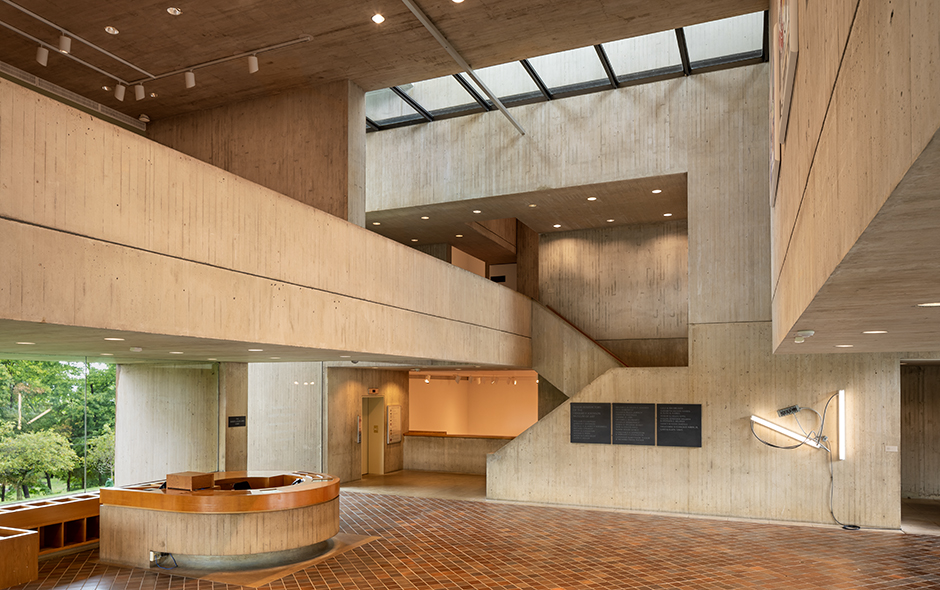
Named in homage to Cornell astronomy professor Carl Sagan (1934–1996), Cosmos is a site-specific installation by New York–based artist Leo Villareal, a pioneer in the use of light-emitting diodes (LEDs) and computer-driven imagery. Villareal’s signature pieces explore complex movement and dazzling patterns created by points of light using his own computer software.
Planning for Cosmos began in 2010, when Villareal—along with project architect Walter Smith and donors Lisa and Richard Baker—worked with Johnson Museum staff to determine the optimal location for the installation. The ceiling of the Sherry and Joel Mallin Sculpture Court—measuring 45 × 68 feet and soaring to a height of 67 feet—was chosen for its high visibility not only on campus but also from the city of Ithaca.
Installation of the final piece took several weeks, with a gridded framework attached to the ceiling of the sculpture court holding twelve thousand energy-efficient LEDs. While Villareal developed many of the light patterns on the computer in his studio, the final imagery was created from direct observation on site, such as cloud movement and flocks of geese flying over Ithaca that he saw in early fall. “It’s almost like a musical instrument that you have to tune and get just right,” he said. “It’s a process of discovery, because I don’t know in advance what it’s going to be.”
The artist spent a week in residence at Cornell, adjusting his programming in response to his own observations from a variety of vantage points on and near campus. Commenting on this interaction between the existing architecture and his installation, Villareal said, “The challenge for me is to find a way to do it that respects what’s here but that adds another layer that can really invigorate the building and make people look at it in a new way.” He also designed and installed a twenty-five-foot zero gravity bench for the sculpture court for viewers to fully immerse themselves in the viewing experience and to foster a more communal involvement with his installation.
(Andrea Inselmann, A Handbook of the Collections, 2018)