

Search

A concrete cantilevered building against blue sky and green landscaping

A large green wall with oil paintings in gold frames above a tiled floor

A museum interior space with paintings and concrete walls and stairs

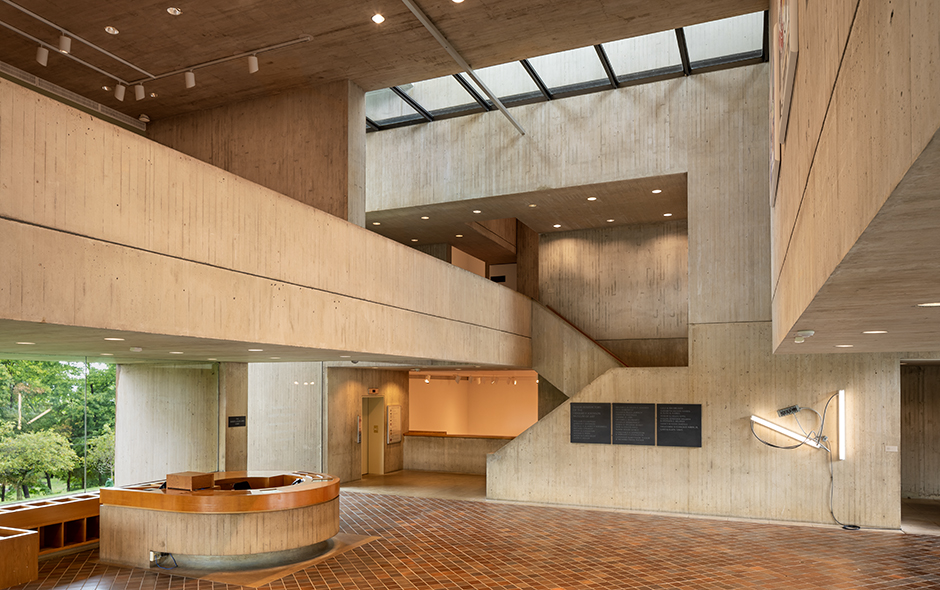
A concrete-walled lobby with windows, a tiled floor, and a circular desk

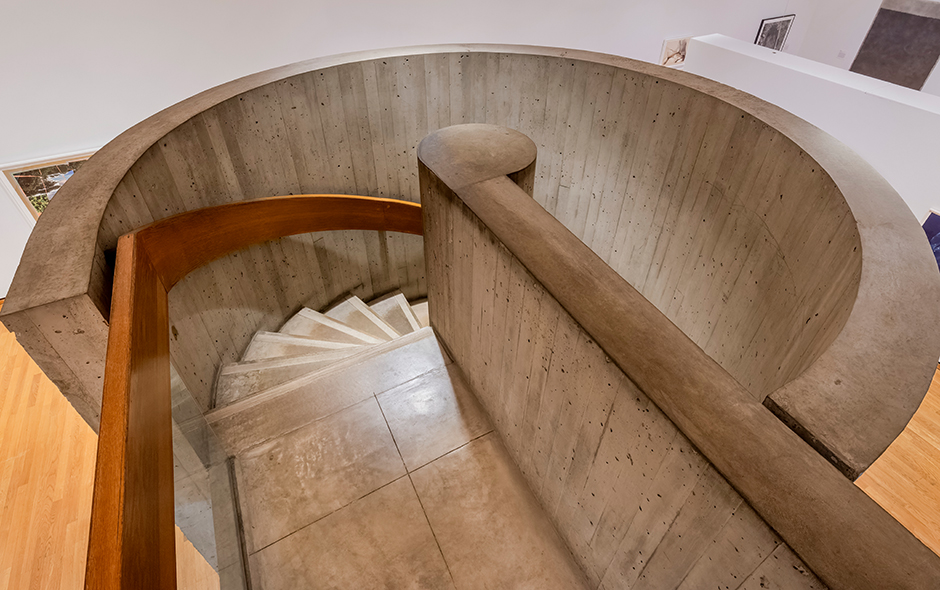
The top of a concrete spiral staircase with a wooden railing

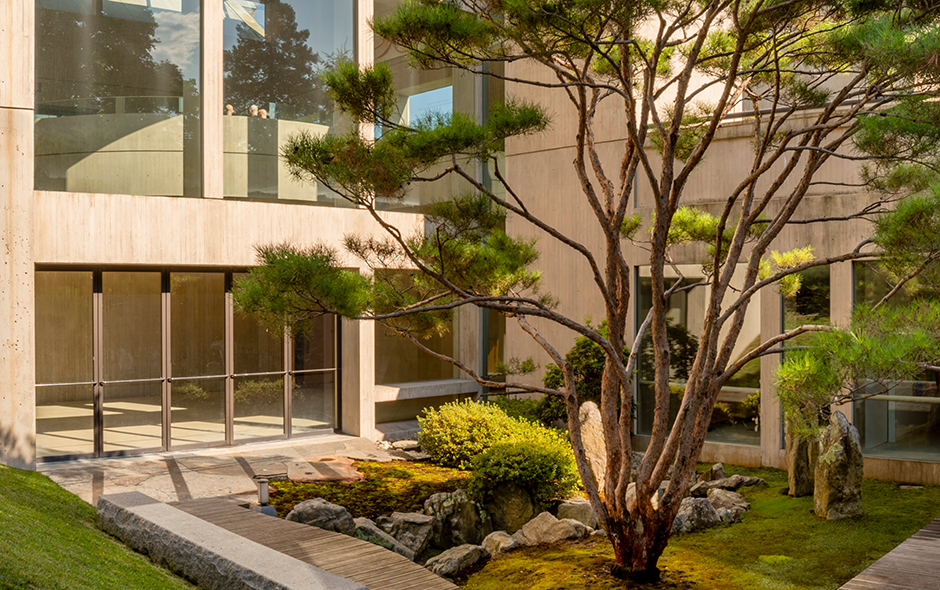
A tall tree is the focal point of a garden in between two concrete buildings

About arrow_back

Admission for everyone is always free! Check here for current hours and more.

A concrete cantilevered building against blue sky and green landscaping

Collections arrow_back

The Johnson Museum holds more than 40,000 works in its collection from around the world.

A large green wall with oil paintings in gold frames above a tiled floor

Exhibitions arrow_back

Check out what’s on view this season at the Museum and look back through our history.

A museum interior space with paintings and concrete walls and stairs

Events arrow_back

Free events for everyone, plus special programs for students, families, and more!

A concrete-walled lobby with windows, a tiled floor, and a circular desk

Learn arrow_back

The Johnson Museum actively contributes to the intellectual life of our campus and community.

The top of a concrete spiral staircase with a wooden railing

Support arrow_back

Help the Johnson Museum continue its legacy by making a gift today.

A tall tree is the focal point of a garden in between two concrete buildings

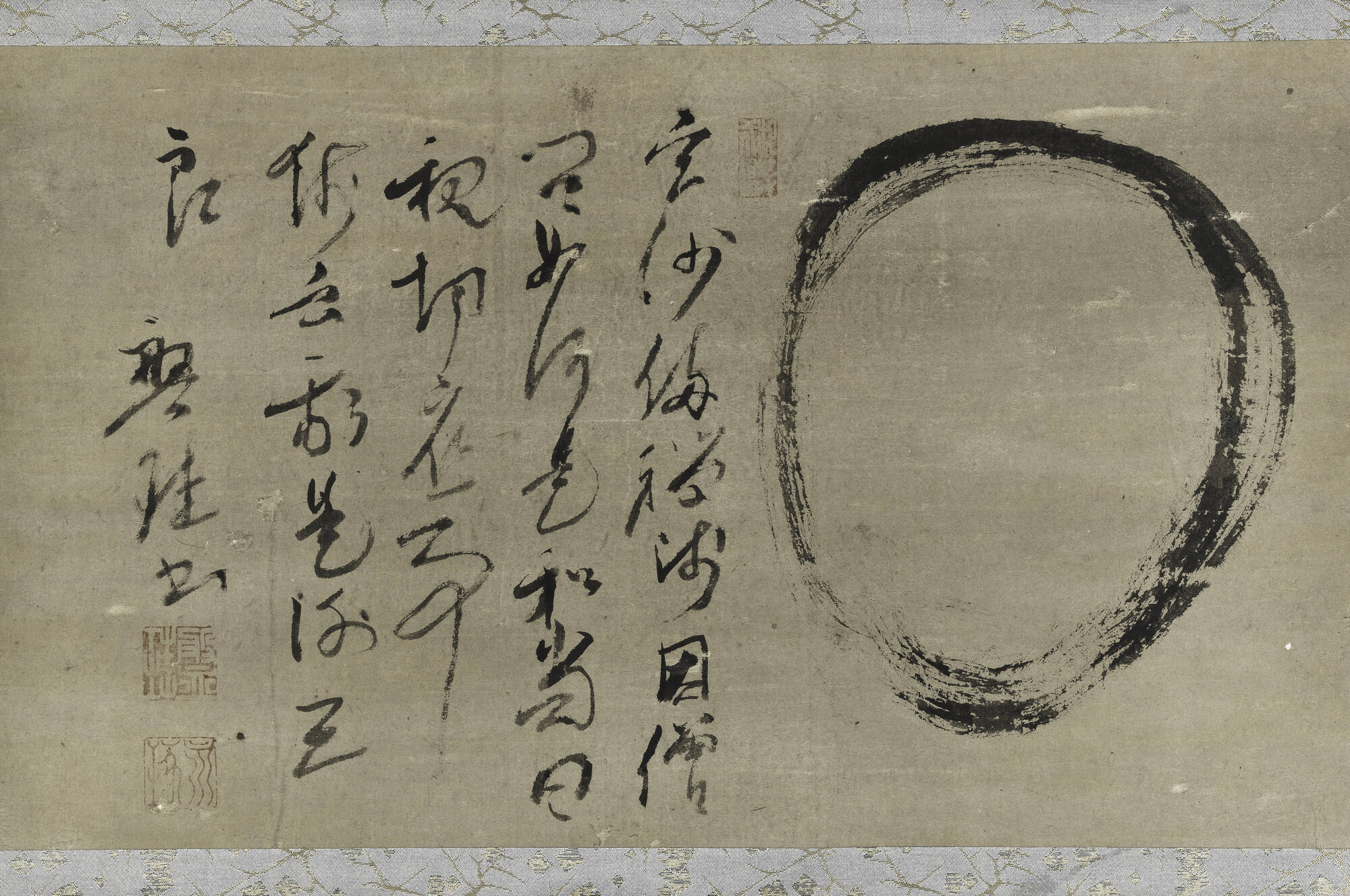
Bankei Yotaku

(Japanese, 1622–1693)

Enso

View All Works

Object Details

Artist

Bankei Yotaku

Date

17th century

Medium

Hanging scroll: ink on paper

Dimensions

11 7/16 × 19 7/16 inches (29.1 × 49.4 cm)

Credit Line

Acquired through the Lee C. Lee Endowment for East Asian Art

Object
Number

2012.013

In its simplicity and directness, the enso or Zen circle, goes beyond words to convey essential Zen (…)

In its simplicity and directness, the enso or Zen circle, goes beyond words to convey essential Zen teaching. Among its many meanings, it represents the universe and everything, while at the same time symbolizing the void. The enso serves as an aid to meditation that can help the mind reach both fullness and emptiness.Bankei became the 218th abbot of Myoshin-ji in Kyoto but spent much of his time traveling throughout Japan speaking to general audiences. Known for his unconventional approaches, he taught that each person (men and women alike) has an inherited Buddha-mind that is unborn but can be buried by selfishness and desire. Bankei developed an individualistic style in his painting and calligraphy. While the enso is typically brushed in a single stroke, he sometimes used two strokes. Here he appears to have painted the enso by circling the brush twice. The inscription quotes a famous koan (a Zen conundrum), of Chinese priest Xuansha Shibei (Gensha Shibi, 835-908) from the Compendium of the Five Lamps [Goto egen], a 13th century compilation of Zen dialogues:Master Gensha was asked by a monk “Does a monk have to know all the basics of society?”The master replied, “I am Shasanro.”
Create an account

Please take a moment to fill your information to create your account.

Reset Password

Lost your password? Please enter your email address. You will receive mail with link to set new password.

Save Artwork

Save the artwork in any of your exhibitions or create a new one.

You have not made any exhibitions.

Create New Exhibition

Create New Exhibition