


Object Details
Artist
Kano Doun Masanobu
Date
17th century
Medium
Hanging scroll: ink and colors on silk
Dimensions
10 1/2 × 26 3/4 inches (26.7 × 67.9 cm)
Credit Line
Acquired through the Lee C. Lee Endowment for East Asian Art
Object
Number
2011.025
According to an old Chinese legend, one day the Daoist priest Lu Xiujing and the Confucian poet T(…)
According to an old Chinese legend, one day the Daoist priest Lu Xiujing and the Confucian poet Tao Yuanming visited the Buddhist monk Huiyuan, who had become a recluse and vowed never to leave his mountain temple. As they concluded their visit together, the three friends became so caught up in conversation that Huiyuan inadvertently crossed the bridge over the Tiger Glen, a ravine that formed the boundary of the temple precinct. As soon as they realized what had happened, the men burst into laughter at the absurdity of this transgression. The parable teaches that true wisdom is gained when boundaries of difference are overcome through mutual understanding.
The theme became popular in Japan, especially among Kano-school artists whose subject matter and ink-painting style derived from Chinese traditions. An important subject in Chinese painting, the theme also became popular in Japan, especially among Kano-school artists who looked to Chinese traditions in their approach to ink painting. Here, the three men are shown laughing together at the edge of the glen, having just crossed the bridge over a raging torrent.
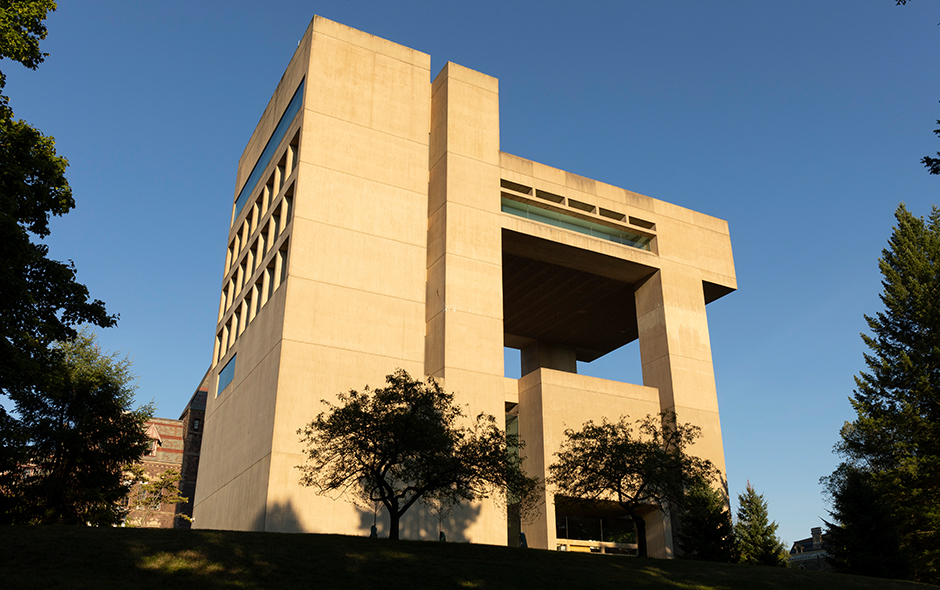
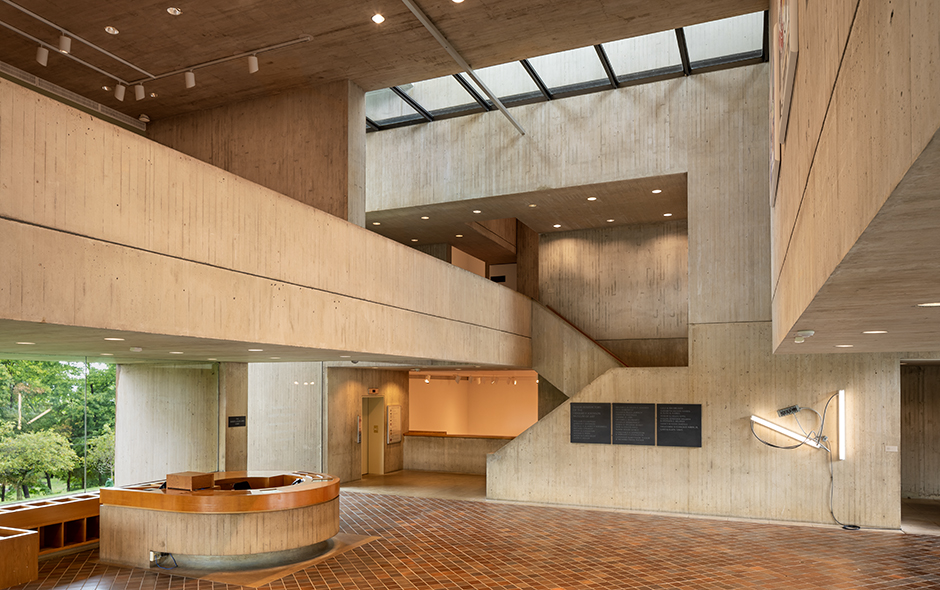
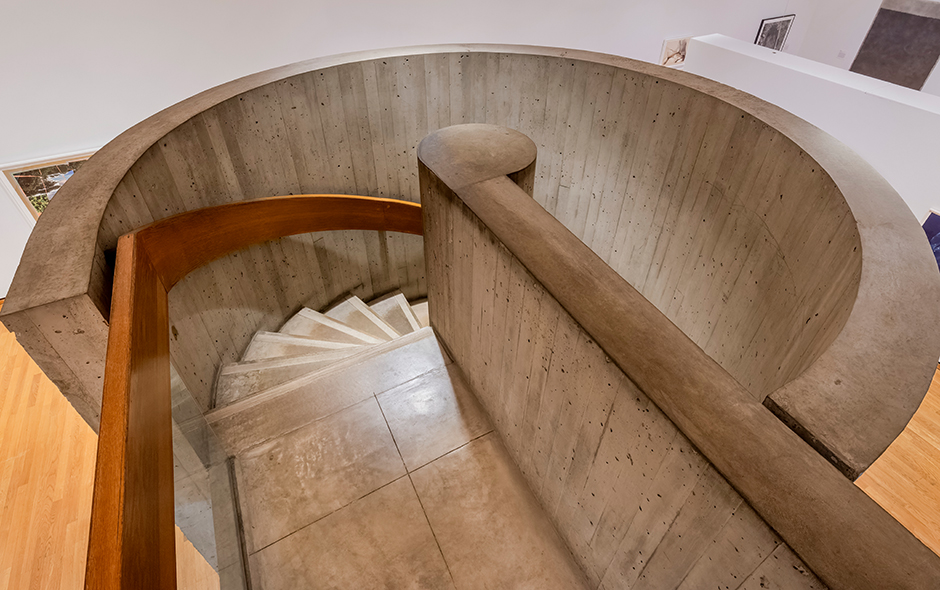
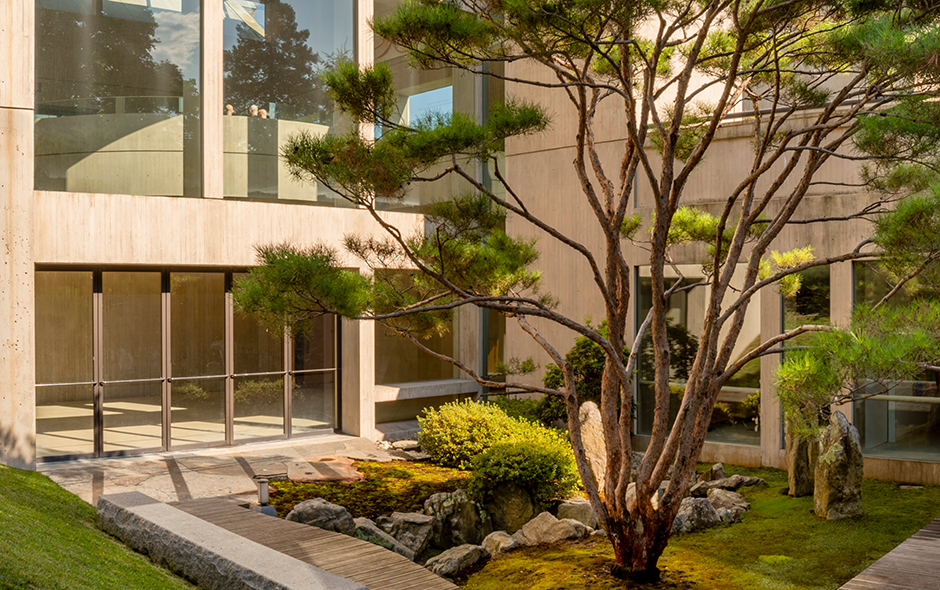
I. M. Pei’s original concept for the Johnson Museum called for a north wing and a Japanese garden, which were finally realized with the Museum’s 2011 expansion. The Rebecca Q. and James C. Morgan Garden, made possible through the generosity of two members of the Class of 1960, was designed by landscape architect and Japanese garden expert Marc Peter Keane, Class of 1979. Poetically named Kokei no Niwa (Tiger Glen Garden), it re-creates the Three Laughers story in the abstract form associated with karesansui garden tradition. The laughers are represented by three upright boulders, while a cleft through a field of moss represents the ravine, lined with small stones in an undulating pattern that evokes the flow of the stream. A nearby stone water basin (tsukubai) provides the sound of water to assist the viewer’s imagining of the Tiger Glen. As the completion of the garden drew near, the Museum acquired Kano Doun Masanobu’s painting through Marc Keane’s connections in Japan.
(Ellen Avril, A Handbook of the Collections, 2018)