

Object Details
Culture
Valdivia Phase II (Ecuador)
Date
2700–2300 BCE
Medium
Earthenware
Dimensions
3 3/8 × 7 5/16 × 6 1/2 inches (8.6 × 18.6 × 16.5 cm)
Credit Line
Gift of Thomas Carroll, PhD 1951
Object
Number
2006.070.001
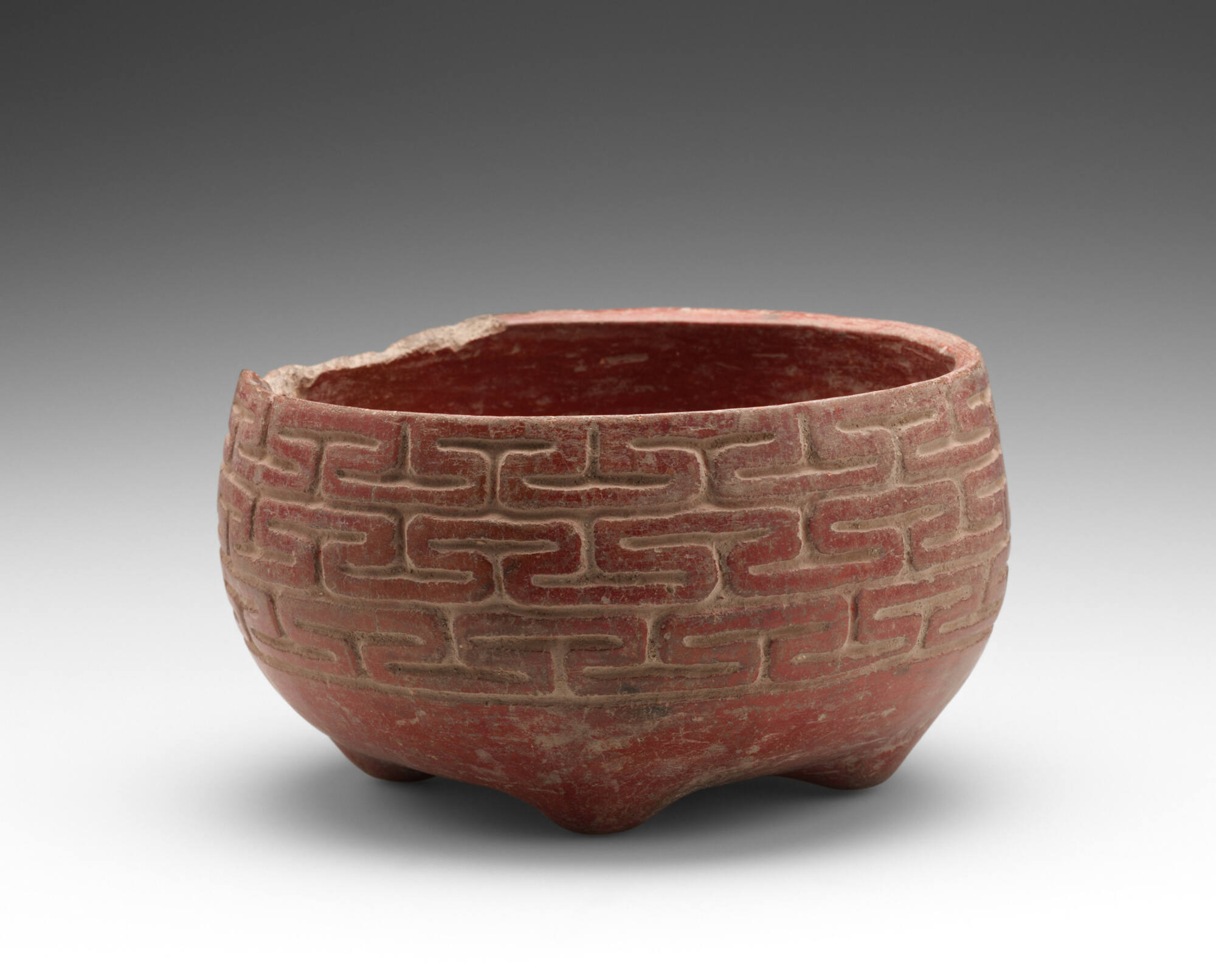
BRIEF DESCRIPTIONThis is a significant ceramic bowl, as it is from the earliest ceramic culture in E(…)
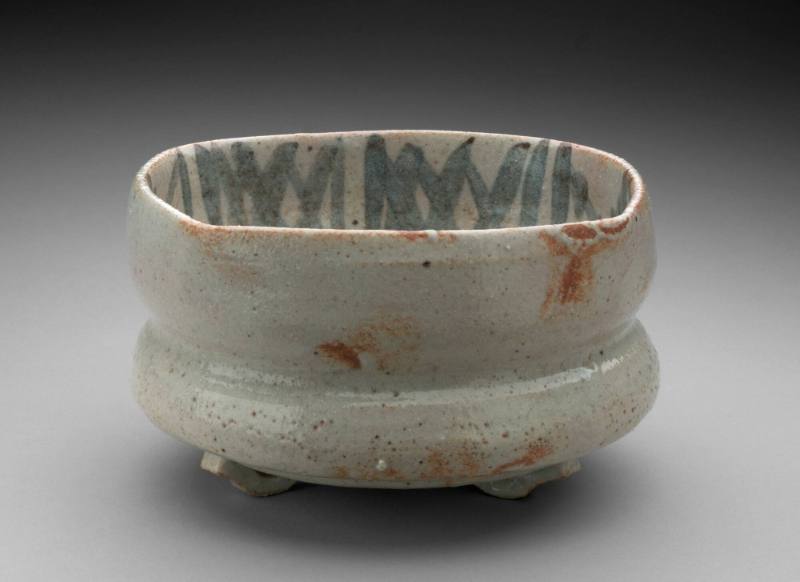
BRIEF DESCRIPTIONThis is a significant ceramic bowl, as it is from the earliest ceramic culture in Ecuador, Valdivia, which is in turn among the earliest in the Americas.WHERE WAS IT MADE?This bowl was made in the coastal region of what is now Ecuador.HOW WAS IT MADE?This bowl was likely hand-built with the coil method. In this method, a base is made by shaping clay into a flat disc. Then hand formed coils of clay, like ropes, are successively added to one another, building up the walls of the bowl. A tool such as a wooden paddle is used to smooth the sides both inside and out, leaving no trace of the coils. Once it had dried to a leather-hard state, the interlocking designs were carved into the surface. It was fired in a pit in the earth.HOW WAS IT USED?This bowl may have been used to serve food. While we may be able to make educated guesses about what was served, except for contact-period ceramics and some grave goods, it is very difficult to determine who used any given piece of pottery, and under what circumstances. Were some vessels reserved for special guests, or for use by high-status elders? Were they used during special religious ceremonies or rituals? Was their use avoided by certain classes of people, such as children and/or menstruating women? As we venture farther back into the past, answering such questions becomes increasingly difficult. Although it is tempting to draw on information from modern traditional societies and from contact-period chronicles, this must be done with care, especially when used to interpret objects distant in both space and time.The people of Valdivia grew crops such as maize (corn), beans, cotton, and peanuts as well as exploiting resources such as fish and birds, obtained from the sea and from coastal mangrove swamps. Trade with neighboring groups was widespread from very early times, so that people had access to foods from distant locales; for example, remains of seafood, such as fish bones, have been found quite far inland, and mountain crops such as coca leaves have been found in sites on the coast.WHY DOES IT LOOK LIKE THIS?The reddish color of this bowl occurs naturally in the clay that was used to make it; it is intensified when the oxygen and heat combine in the firing process to oxidize the iron in the clay. Notice the three small feet on the bowl and the incised pattern on the outside surface. We cannot know for sure what significance the form and decoration on this bowl may have held to the people who made and used it. World-wide, most pristine cultures’ earliest pottery was monochrome decorated by numerous techniques of surface texturing.ABOUT THE VALDIVIA CULTURE:The Valdivia culture was centered on the arid Santa Elena Peninsula. Although primarily regarded as a coastal culture, Valdivia influence also extended inland, where many of its agricultural settlements were located. Valdivia is famous as one of the earliest pottery-producing cultures in South America, and is noted for its “Venus” figurines, most of which depict stylized women with rudimentary features. One of the original “cradles of civilization” in South America, innovations in pottery technology spread outward from Valdivia to other cultural groups and eventually gave rise to the rich ceramic traditions of the later high civilizations. Such quintessentially Andean traits as the use of coca leaves and the practice of weaving cotton textiles (and perhaps using shellfish-derived purple dyes to color them) were already present at Valdivia. The population lived in tribal chiefdoms comprised of lineage groups, in settlements that included dedicated ritual areas as well as residential spaces. While the origins of the Valdivia people are unclear, they appear to have had a relationship with the tropical forests of lowland Amazonia, perhaps by descent or through trade. The Valdivia culture gave rise to the subsequent Machalilla culture.