



Search

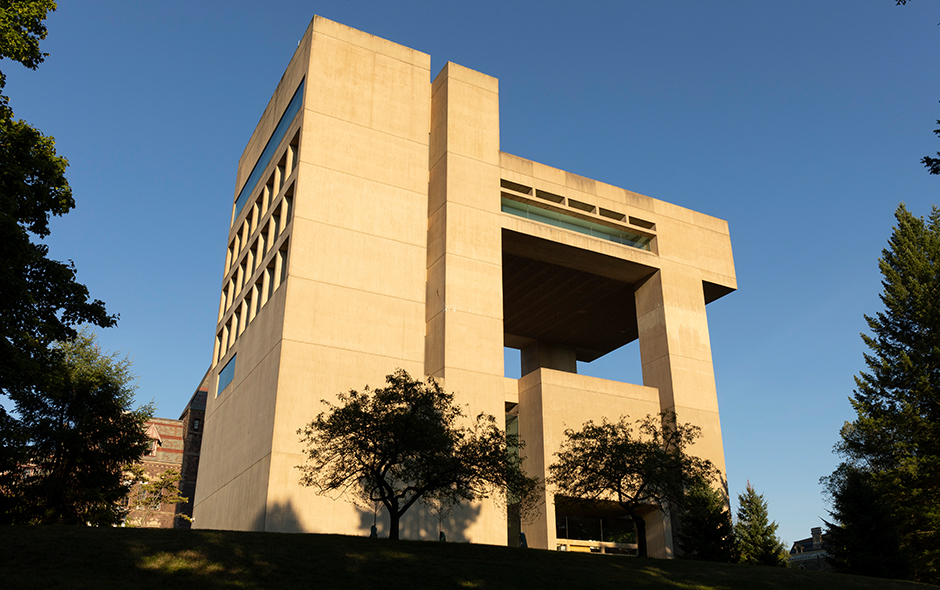
A concrete cantilevered building against blue sky and green landscaping

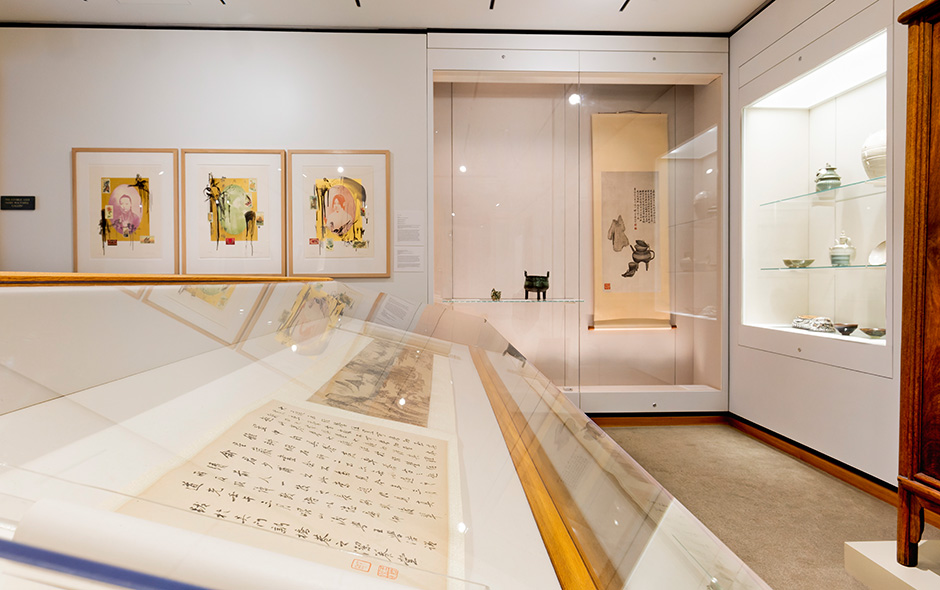
A large green wall with oil paintings in gold frames above a tiled floor

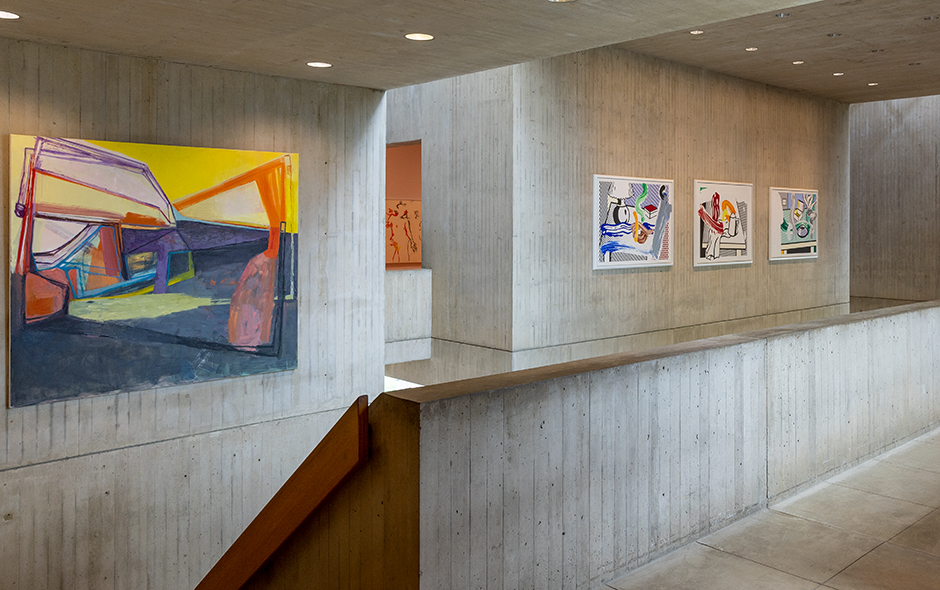
A museum interior space with paintings and concrete walls and stairs

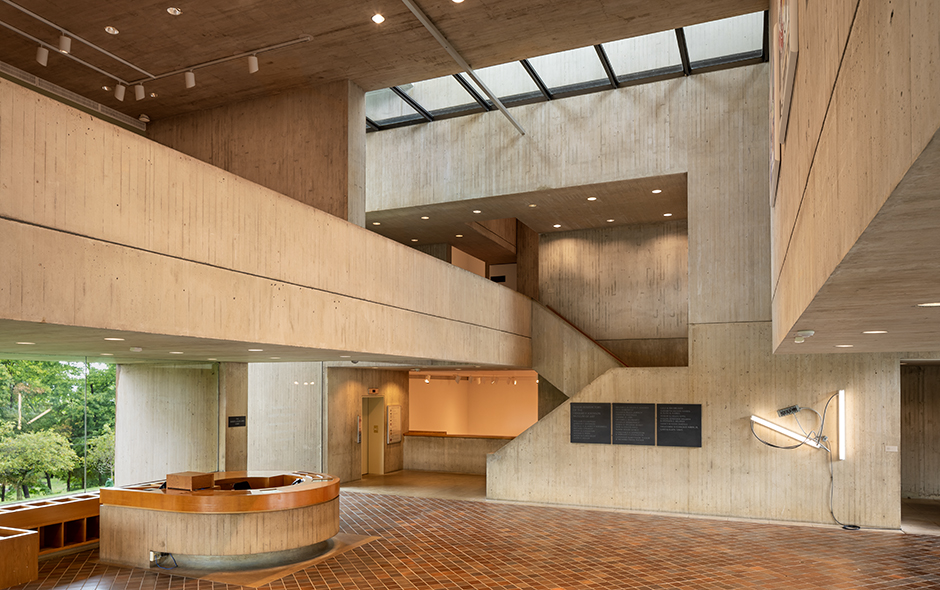
A concrete-walled lobby with windows, a tiled floor, and a circular desk

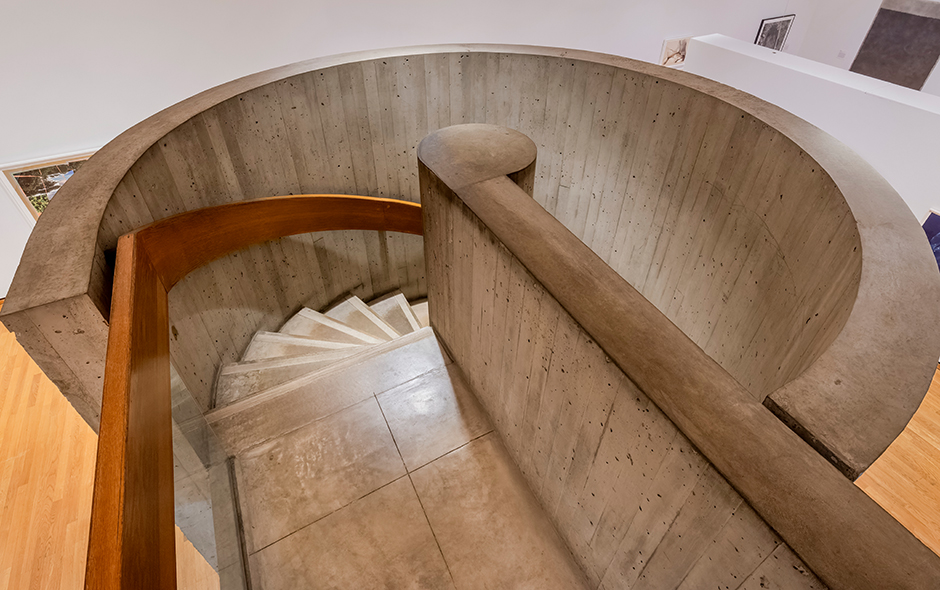
The top of a concrete spiral staircase with a wooden railing

A tall tree is the focal point of a garden in between two concrete buildings

About arrow_back

Admission for everyone is always free! Check here for current hours and more.

A concrete cantilevered building against blue sky and green landscaping

Collections arrow_back

The Johnson Museum holds more than 40,000 works in its collection from around the world.

A large green wall with oil paintings in gold frames above a tiled floor

Exhibitions arrow_back

Check out what’s on view this season at the Museum and look back through our history.

A museum interior space with paintings and concrete walls and stairs

Events arrow_back

Free events for everyone, plus special programs for students, families, and more!

A concrete-walled lobby with windows, a tiled floor, and a circular desk

Learn arrow_back

The Johnson Museum actively contributes to the intellectual life of our campus and community.

The top of a concrete spiral staircase with a wooden railing

Support arrow_back

Help the Johnson Museum continue its legacy by making a gift today.

A tall tree is the focal point of a garden in between two concrete buildings

Thomas Hart Benton

(American, 1889–1975)

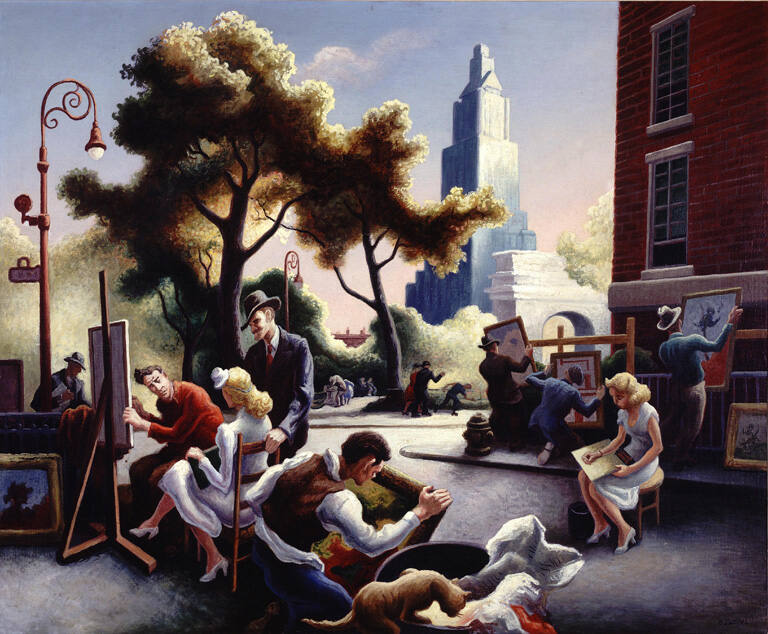
The Artist’s Show, Washington Square, New York
View All Works

Object Details

Artist

Thomas Hart Benton

Date

1946

Medium

Oil and tempera on canvas

Dimensions

40 1/8 x 48 1/8 inches (101.9 x 122.3 cm)

Credit Line

Gift of Jerome K. Ohrbach, Class of 1929

Object
Number

77.080

Although Thomas Hart Benton had first been associated with the circle of Alfred Stieglitz, he began (…)

Although Thomas Hart Benton had first been associated with the circle of Alfred Stieglitz, he began to feel that this group was too separated from reality, with their “play with colored cubes and classic attenuations.” His service in World War II as a naval draftsman forced him to make objective records of the navy yard and installations at Norfolk, Virginia. Upon his return to New York after the war, he advocated an “American scene” subject matter, in the face of adverse criticism. This movement, later called “regionalism” gained in popularity and included such prominent figures as Grant Wood, Sinclair Lewis, and Sherwood Anderson. But Benton’s interpretation of the American scene was unique, calling into play his knowledge of the dynamic energy and muscular, sinuous line of the work of Michelangelo and El Greco. The Washington Square art show occurred at the end of every summer in New York, drawing a wide range of artists, collectors, and spectators. Benton successfully captured the bustling character of the event. The animation of the figures and the amount of anecdotal information are typical of Benton’s dynamic and compact compositions, which influenced the work of his most famous student, Jackson Pollock. (From “A Handbook of the Collection: Herbert F. Johnson Museum of Art,” 1998)

Discover More

Springtime Song

Louis Michel Eilshemius

Vanitas

David Bailly

Lake Geneva, Switzerland

Louis Michel Eilshemius

Finsterhorn

Albert Bierstadt

Create an account

Please take a moment to fill your information to create your account.

Reset Password

Lost your password? Please enter your email address. You will receive mail with link to set new password.

Save Artwork

Save the artwork in any of your exhibitions or create a new one.

You have not made any exhibitions.

Create New Exhibition

Create New Exhibition