

Search

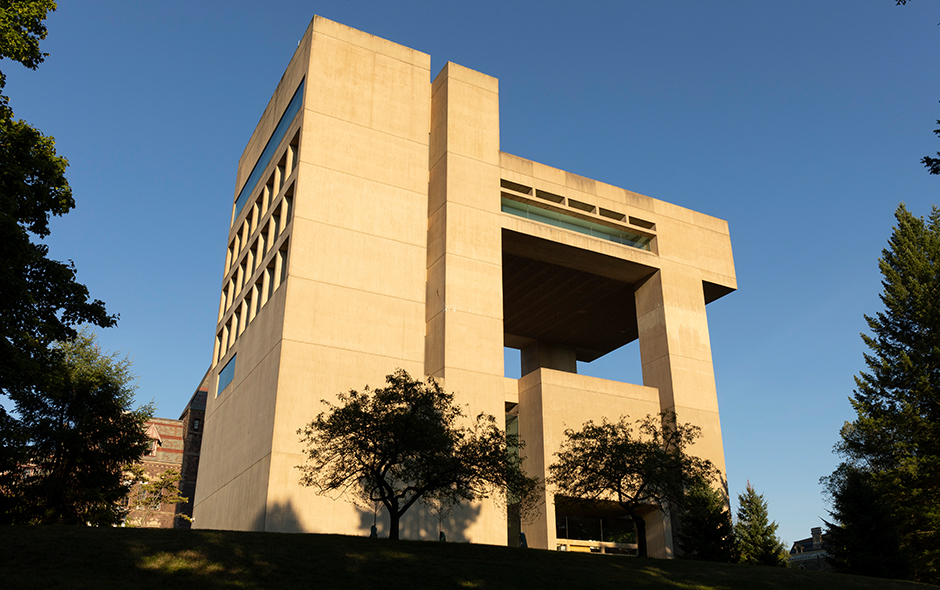
A concrete cantilevered building against blue sky and green landscaping

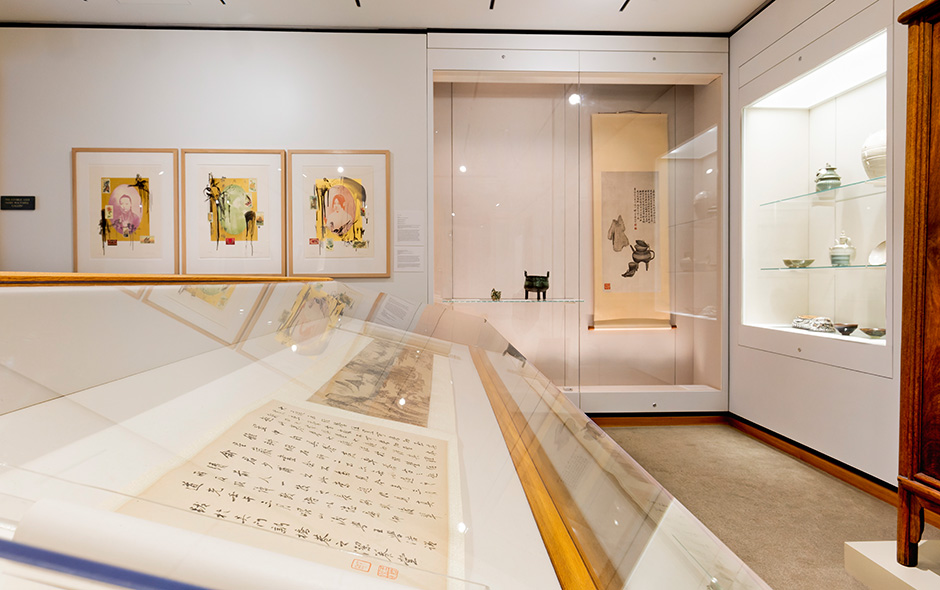
Museum gallery with art from China

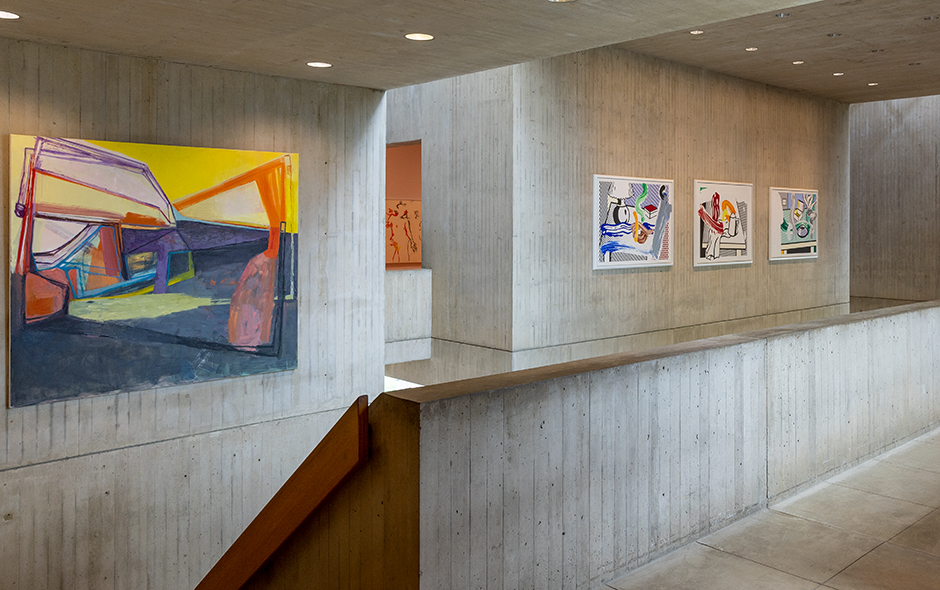
A museum interior space with paintings and concrete walls and stairs

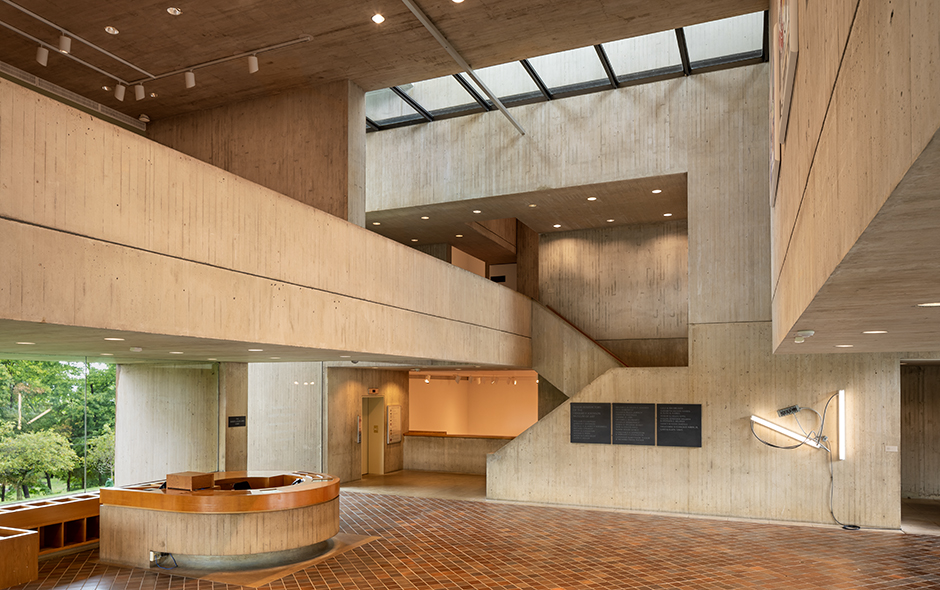
A concrete-walled lobby with windows, a tiled floor, and a circular desk

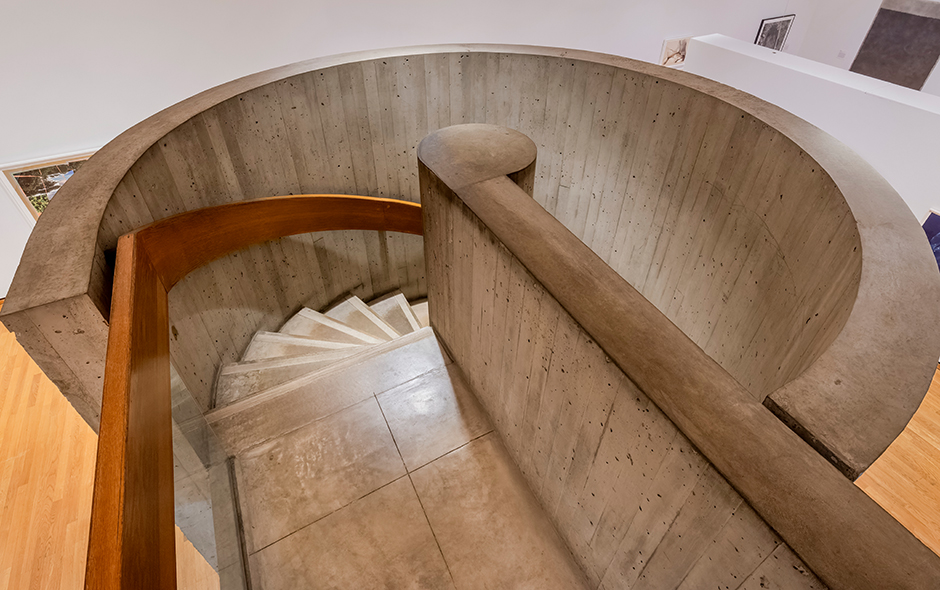
The top of a concrete spiral staircase with a wooden railing

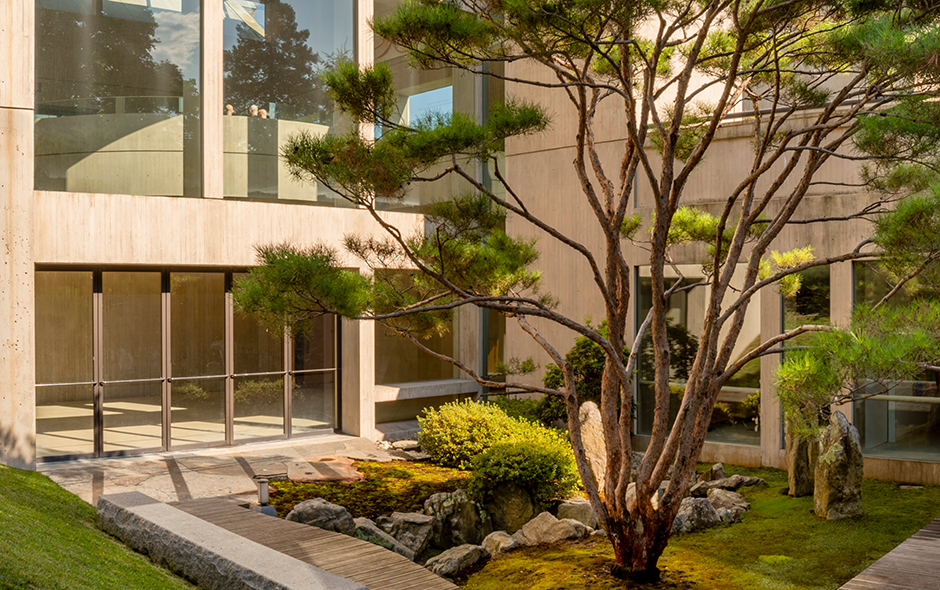
A tall tree is the focal point of a garden in between two concrete buildings

About arrow_back

Admission for everyone is always free! Check here for current hours and more.

A concrete cantilevered building against blue sky and green landscaping

Collections arrow_back

Questions?

Our online database is experiencing intermittent technical difficulties. You can email museum@cornell.edu if you need assistance with your research inquiry while we work to resolve the issue.


Museum gallery with art from China

Exhibitions arrow_back

Check out what’s on view this season at the Museum and look back through our history.

A museum interior space with paintings and concrete walls and stairs

Events arrow_back

Free events for everyone, plus special programs for students, families, and more!

A concrete-walled lobby with windows, a tiled floor, and a circular desk

Learn arrow_back

The Johnson Museum actively contributes to the intellectual life of our campus and community.

The top of a concrete spiral staircase with a wooden railing

Support arrow_back

Help the Johnson Museum continue its legacy by making a gift today.

A tall tree is the focal point of a garden in between two concrete buildings

François Collignon

(French, ca. 1610–1687)

Vue de Rome: Le Palatin

View All Works

Object Details

Artist

François Collignon

Medium

Etching

Dimensions

Plate: 4 9/16 × 9 13/16 inches (11.6 × 24.9 cm)
Sheet: 5 3/16 × 10 1/4 inches (13.2 × 26 cm)

Credit Line

Bequest of William P. Chapman, Jr., Class of 1895

Object
Number

57.150

These prints, whose designs were previously attributed to Jacques Callot, show the degree to which d(…)

These prints, whose designs were previously attributed to Jacques Callot, show the degree to which depictions of Rome often still deviated from topographical fidelity, even at midcentury. The first of these views is probably taken from near the Castel Sant’Angelo; what is likely one of its bastions, surmounted by the papal coat of arms, rises at right. Faucheux identifies the church just left of center as San Girolamo degli Schiavoni, and notes the two towers of Santissima Trinità dei Monti, which stands atop the Spanish Steps, rising above the blocklike arcaded palace at left. The second view seems to include the Palatine Hill, with the church of Santa Francesca Romana and the ruins of the Basilica of Constantine. Silvestre conveys the emptiness and the wildness of the Roman forum at this time; however, all of the specific monuments are to some degree misinterpreted, misplaced, and distorted, which indicates that he likely drew his scene from memory after his return to France.

(Andrew C. Weislogel, “Mirror of the City: The Printed View in Italy and Beyond, 1450–1940,” catalogue accompanying an exhibition organized by the Herbert F. Johnson Museum of Art, curated by Andrew C. Weislogel and Stuart M. Blumin, and presented at the Johnson Museum August 11–December 23, 2012)

Discover More

The BIG I

Alexander Calder

A Team

Raphael Soyer

Urban Landscapes

Richard Estes

Coffee Thyme II

Sam Gilliam

Create an account

Please take a moment to fill your information to create your account.

Reset Password

Lost your password? Please enter your email address. You will receive mail with link to set new password.

Save Artwork

Save the artwork in any of your exhibitions or create a new one.

You have not made any exhibitions.

Create New Exhibition

Create New Exhibition