

Object Details
Culture
Korea
Goryeo
Date
Goryeo Dynasty (918-1392); 12th century
Medium
Glazed stoneware
Dimensions
Height: 12 1/4 inches (31.1 cm)
Credit Line
George and Mary Rockwell Collection
Object
Number
88.002.076
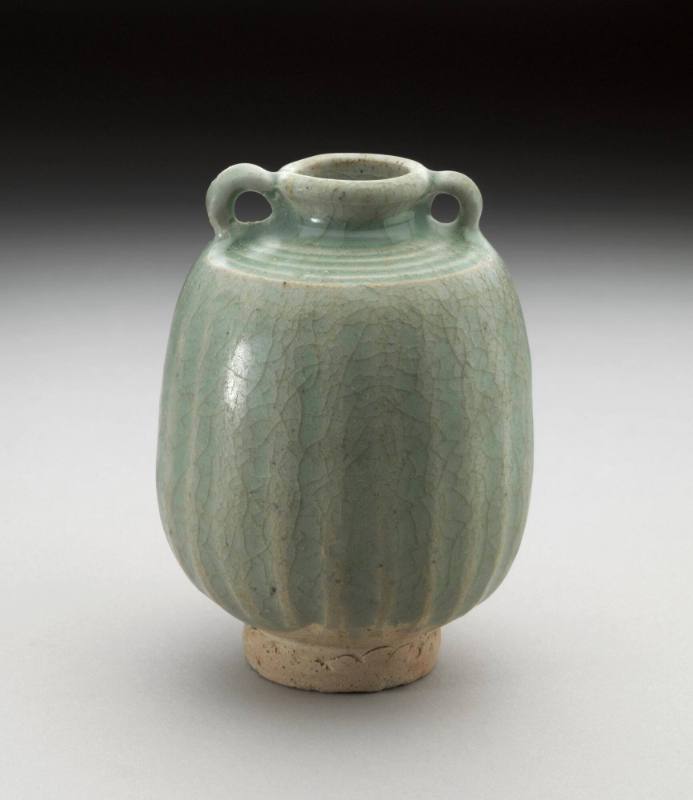
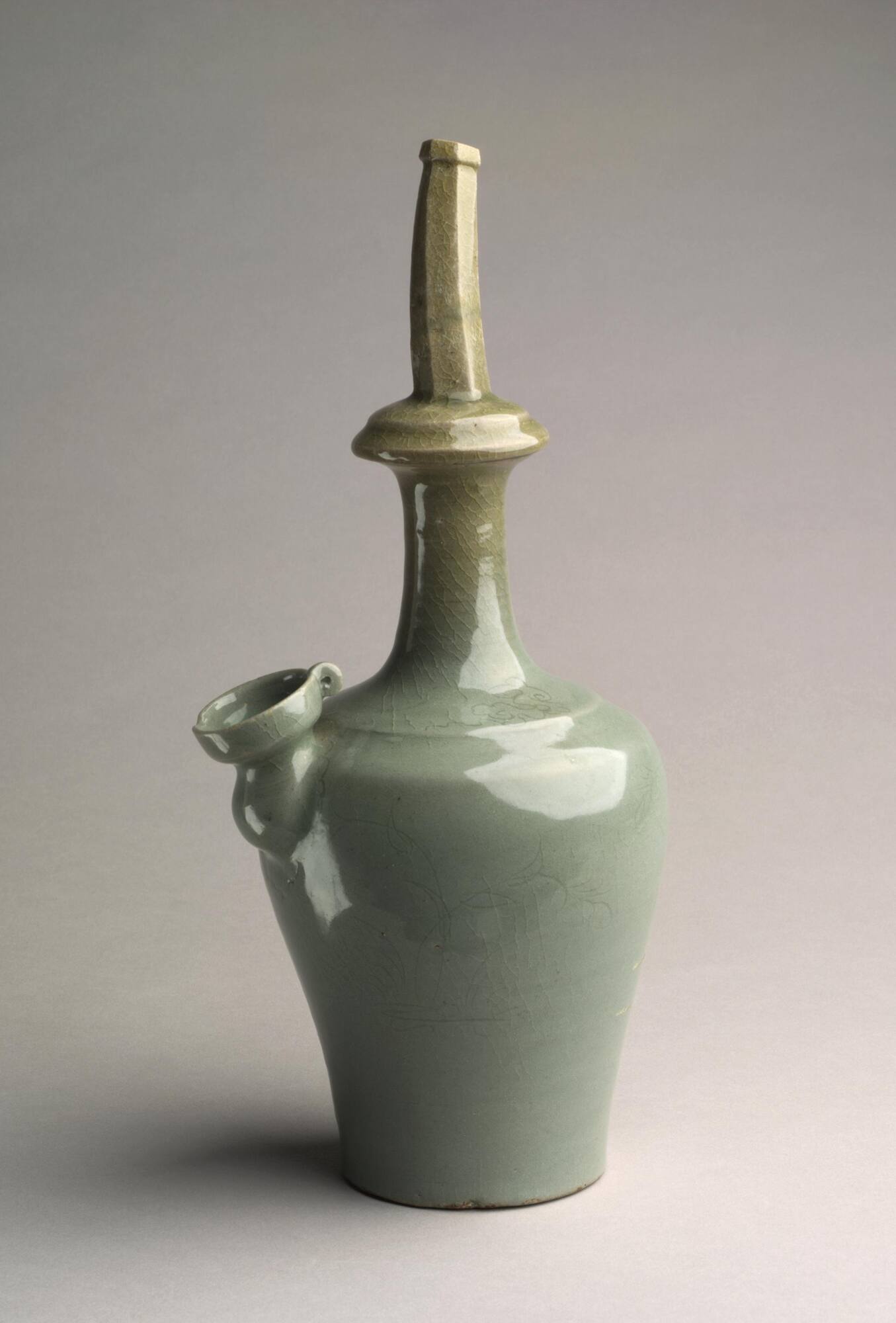
BRIEF DESCRIPTIONThis is a ceramic water sprinkler (kundika) from Korea, made for Buddhist rituals.W(…)
BRIEF DESCRIPTIONThis is a ceramic water sprinkler (kundika) from Korea, made for Buddhist rituals.WHERE WAS IT MADE?This vessel was made in Korea during the Goryeo period. HOW WAS IT MADE?The decorations along the outside of the vessel were achieved by pressing into the clay with a sharp stylus before the kundika was glazed and fired. When the glaze was applied it pooled in the slightly depressed, incised areas, making it thicker in those places, and therefore slightly darker. The green glaze on this water sprinkler is known in the west as celadon. The glaze contains iron oxides, which turn green when the vessel is fired in a reducing atmosphere. This technique came to Korea from China, along with a new kind of kiln construction. Goryeo ceramics were fired in long kilns (up to 60 feet long and four feet wide) built into the hillsides so that they climbed upwards. The insides of the kilns were lined with clay, and wood was used as the primary fuel for the fire.The kilns were supervised by government officials, and most of the ceramics were made for members of the government and other aristocratic families. Potters did not enjoy high social status, nor were they regarded as artists in the way that painters were.HOW WAS IT USED?The kundika originated in India, where it was used in Buddhist rituals to sprinkle water for purification, and to offer water to the Buddha. Kundikas were originally made of metal. During the Goryeo period, ceramic and bronze versions could be found in Buddhist temples, as well as homes of aristocrats, government officials, and common people. Water was poured into the vessel via the spout on the side, which often had a lid or stopper. If this kundika once had a stopper, it is now missing.Paintings of the Buddhist deity Avalokiteshvara (known in Korean as Gwaneum) from the Goryeo period often include a kundika in the background. To see a bronze kundika in the Johnson Museum’s collection, search for object number 65.353 in the keyword search box.