


Object Details
Culture
Kuba (Democratic Republic of Congo)
Medium
Iron, wood, and bamboo
Dimensions
Height: 22 1/2 inches (57.2 cm)
Credit Line
Gift of William W. Brill
Object
Number
86.089.027
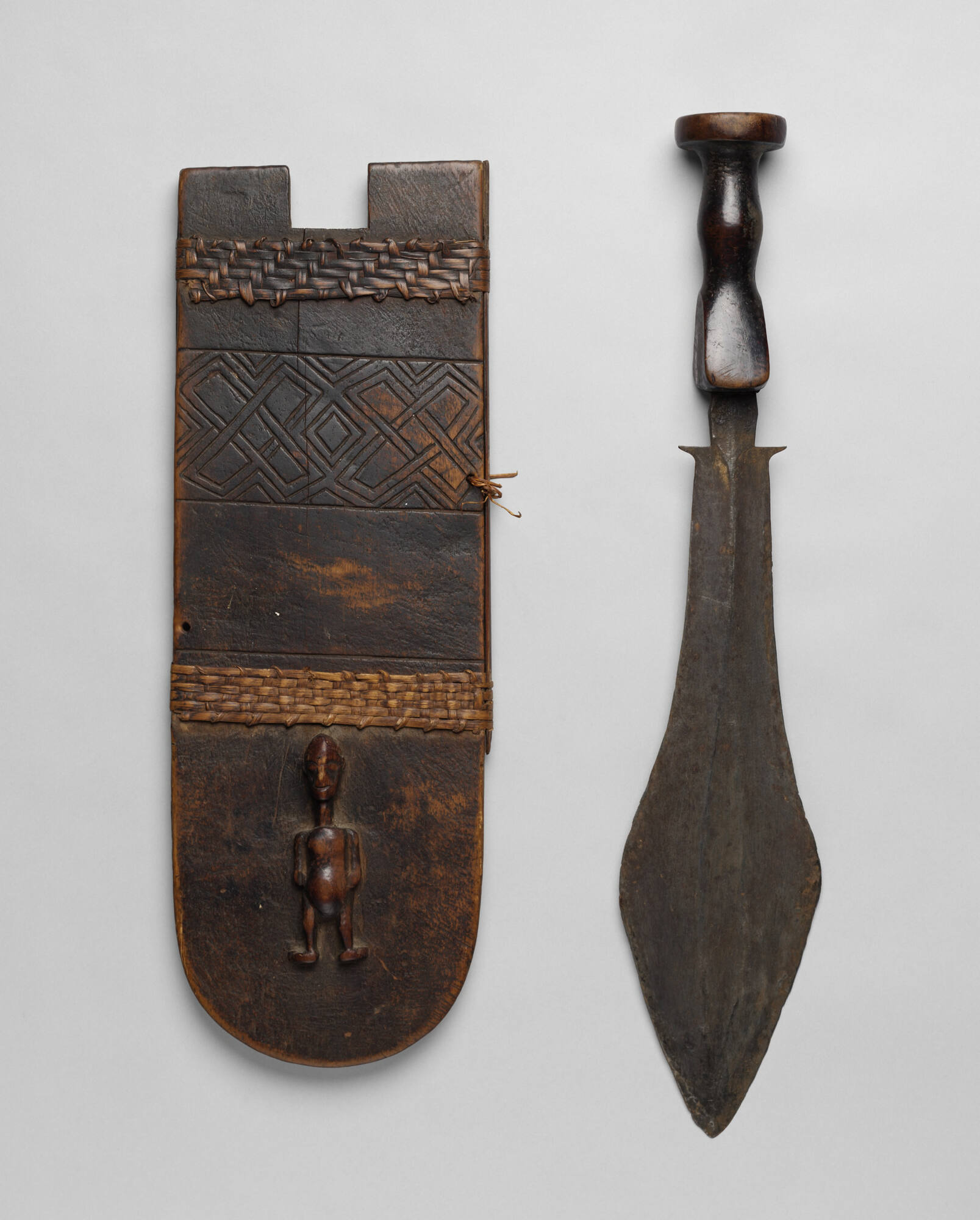
BRIEF DESCRIPTIONThis knife and scabbard were likely used only for ceremonial purposes. Among the Ku(…)
BRIEF DESCRIPTIONThis knife and scabbard were likely used only for ceremonial purposes. Among the Kuba and other Congolese peoples, knives mark an individual’s status and power.WHERE WAS IT MADE?This knife and scabbard were made in the Democratic Republic of Congo.HOW WAS IT MADE?A Kuba blacksmith forged the iron blade and carved the handle and scabbard from wood, using hand tools such as an adze and a knife.HOW WAS IT USED?Large knives often have dual roles in Africa: as finely decorated objects worthy of display, and as impressive weapons used in combat. This knife and scabbard were likely used only for ceremonial purposes. Among the Kuba and other Congolese peoples, knives mark an individual’s status and power. The former owner of this knife enjoyed some status; not only did he own a knife and scabbard to display, the scabbard features some decorative elements.WHY DOES IT LOOK LIKE THIS?Men of the highest rank in Kuba society owned knives that contained an abundance of engraved and applied metal designs. Although this knife blade is unembellished, notice how the scabbard is decorated with carefully wrapped cane (that holds the two sides of the scabbard together), and two carved relief features. To see a Kuba knife with an embellished blade in the Johnson Museum’s collection, search for object number 84.025.016 in the keyword search box.This figure represents no known human or deity, but does depict a healthy man. A high forehead, broad nose, and strong jaw are considered to be attractive among the Kuba, and the slightly protruding belly marks this man as well-fed. The geometric design is a typical Kuba decorative embellishment; interlocking bands frequently appear on everyday objects such as cups, bowls and mats.