





Object Details
Culture
Mali, Bamana peoples
Medium
Wood, buttons, fiber, metal, and cloth
Dimensions
27 x 7 1/2 inches (68.6 x 19.1 cm)
Credit Line
Gift of William W. Brill
Object
Number
86.089.002
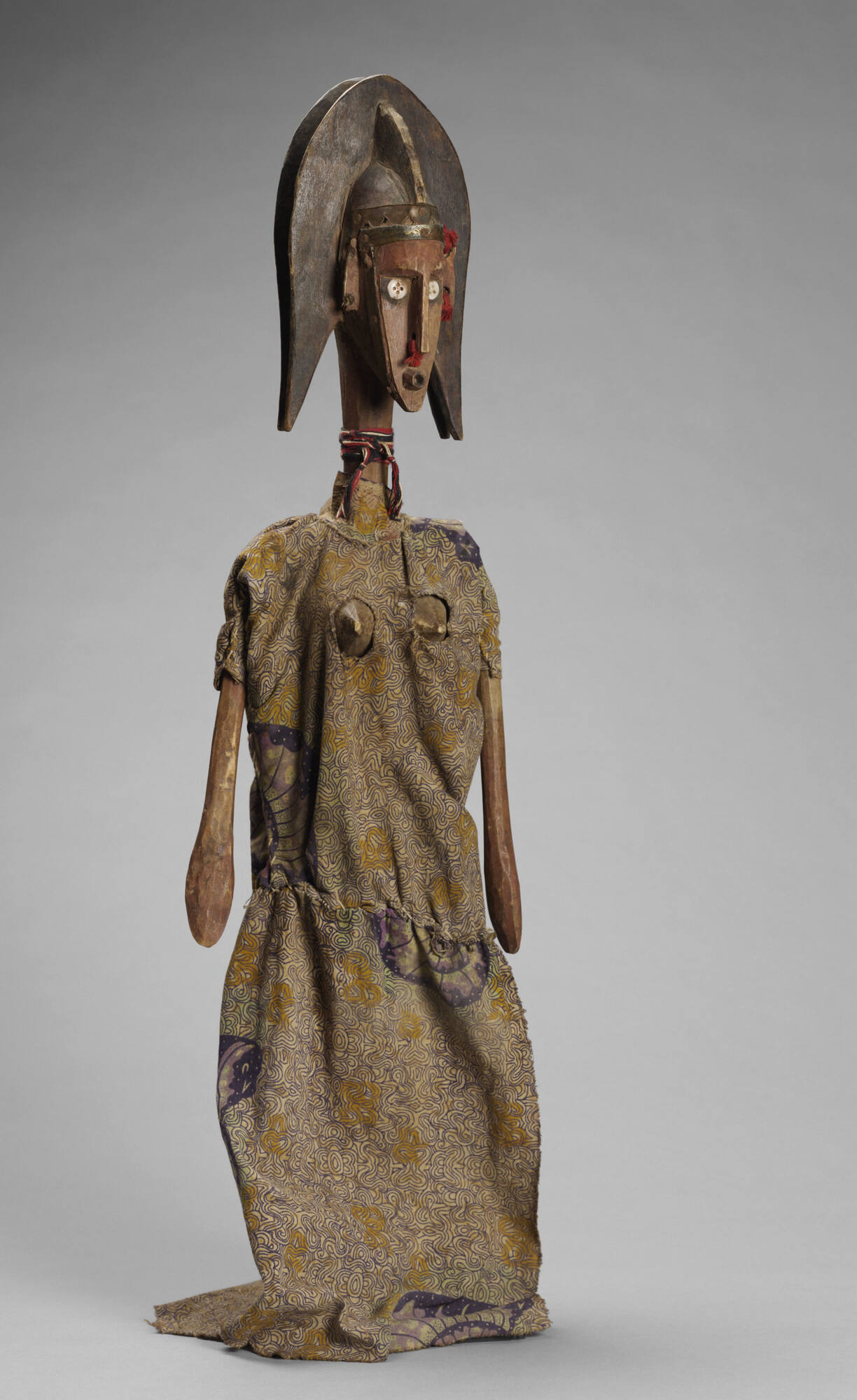
BRIEF DESCRIPTIONMiniature rod puppets like this one take part in the Malian Sogo bò masquerade. Th(…)
BRIEF DESCRIPTIONMiniature rod puppets like this one take part in the Malian Sogo bò masquerade. They represent a great range of characters from musicians and horsemen, to working women and fishermen.WHERE WAS IT MADE?This puppet was made by the Bamana people in Mali, on the West coast of Africa. HOW WAS IT MADE?A Bamana blacksmith carved the puppet from wood using hand tools such as an adze and knives or chisels. This wood marionette has articulated arms and long plaited coiffure, and has been decorated with button eyes, fiber and metal, and a cloth costume.HOW WAS IT USED?This puppet was performed during the Sogo bò, a masquerade performed in Malian communities. Sogo bò means “the animals come forth,” and the masquerade is associated with men who hunt. Sogo bò is assembled and performed by the village youth association. These associations, or ton, include young men between the ages of fourteen and their early thirties, and women from age fourteen until they are married. Women assist in the performance, but the puppeteers are always men. This miniature rod puppet would have been manipulated (along with other small rod puppets) atop a large animal puppet’s back. The fabric covering that forms the animal’s back conceals 2-3 puppeteers and provides a stage for the puppet performance. To see the head of one of the large animal puppets in the collection of the Johnson Museum, search for object number 81.086.003 in the keyword search box.WHY DOES IT LOOK LIKE THIS?Notice the long, straight nose, elaborate coiffure, colorful yarn jewelry, and exposed taut breasts on this puppet. These features help identify her as Yayoroba, the Beautiful Woman. Known characters such as Yayoroba may perform in different puppet dramas. The dramas bring to life many concerns. They can focus on interpersonal relationships, polygamous marriage, or traditional hunting tales. Audiences praise creativity and innovation in the dramas. Performers respond to this encouragement with stories about divorce or contemporary politics and invent new characters such as the Anthropologist who smokes and takes notes.