

Object Details
Culture
Japan
Date
16th century
Medium
Tempered steel, wood, lacquer, rope-braid and various metal alloys
Dimensions
35 x 3 x 3/4 inches (88.9 x 7.6 x 1.9 cm)
Credit Line
Gift of the Estate of the Konoshima Trust
Object
Number
85.045.003
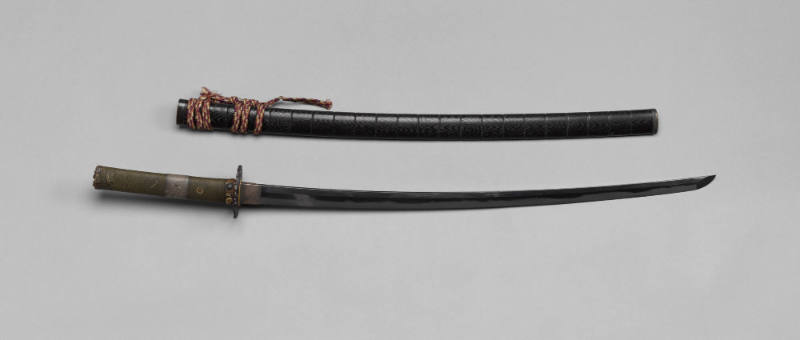
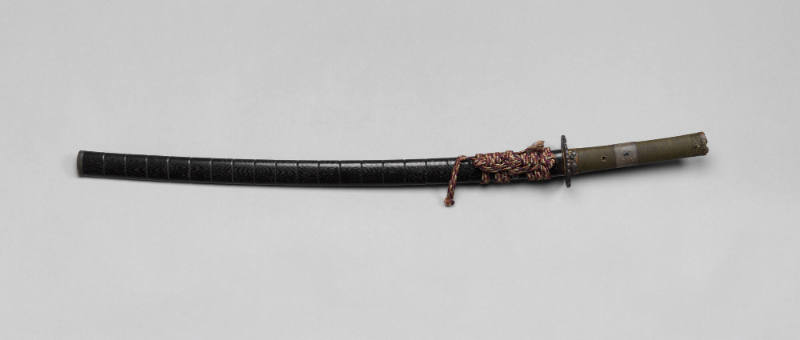
BRIEF DESCRIPTIONThis is a samurai sword and scabbard.WHERE WAS IT MADE?This was made in Japan durin(…)
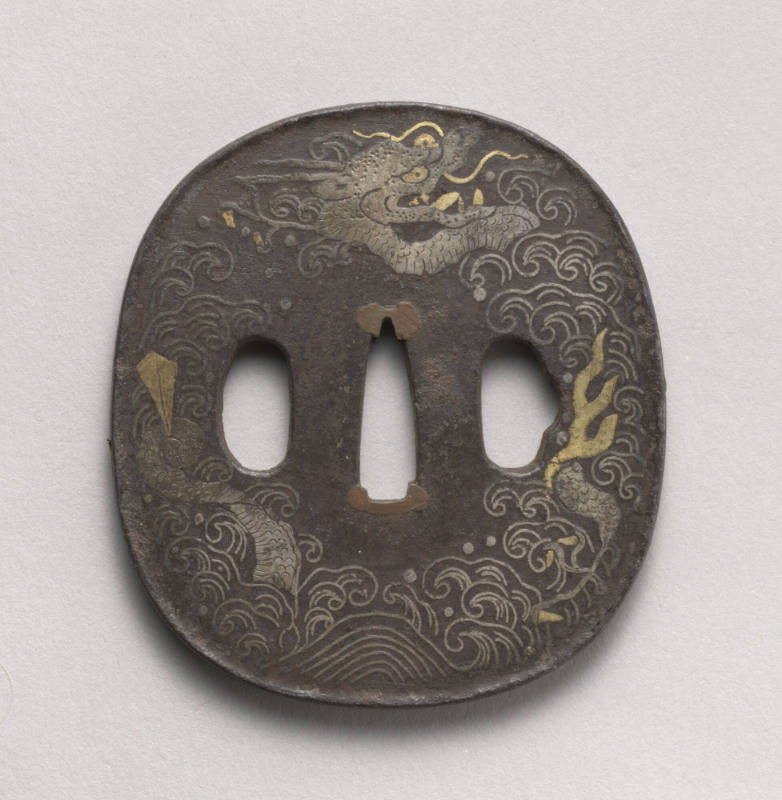
BRIEF DESCRIPTIONThis is a samurai sword and scabbard.WHERE WAS IT MADE?This was made in Japan during the 16th century.HOW WAS IT MADE?Samurai sword blades are known for their combination of great strength and sharpness. This is achieved through a long and labor-intensive process of folding layer upon layer of high-carbon steel (which is very hard) and wrapping it around a hard inner low-carbon steel core (which is soft). One final step before the hardening process yields a unique line along either side of the blade, called the hamon; this step involves applying a mixture of clay and charcoal selectively to the blade. During the hardening process (where the blade is heated to around 800 degrees Fahrenheit and then plunged into cold water) variations in the thickness of this paste will create visible variations in the metallic composition of the blade. Then the blade is sharpened and polished with stones of increasingly fine grit to achieve a razor sharp edge and reveal the patterns created by the folded layers of steel, a method that dates back to the 7th century. The polishing process alone can take up to two weeks, and is done by a specialist.Other parts of the sword, such as the handle (also called a hilt), the hand guard (tsuba), and the scabbard, were manufactured by different expert craftsmen. This particular scabbard is made from lacquered wood. Japanese lacquer (urushi) is derived from the sap of the Rhus verniciflua tree, a member of the plant family that includes poison oak, poison ivy, and poison sumac. Its extreme toxicity poses a danger for those who work with it. Lacquer is made by carefully building up thin layers of sap and letting each layer dry under warm, humid conditions. Once dry, the sap becomes rigid and impervious to water, insects, and most solvents.HOW WAS IT USED?Although the bow and arrow was the most practical and respected weapon for the samurai warrior until the introduction of firearms in the 16th century, the sword has become the most emblematic weapon of the samurai. During the late 15th and early 16th century, samurai began carrying their swords thrust into their obi (sash) with the blade facing up. This allowed for faster response time, as they could both draw and swing the blade in one single motion.WHY DOES IT LOOK LIKE THIS?The slight curve of the blade of this sword is characteristic of the type of sword made during and after the 16th century. Swords before the 16th century were more curved, and were carried with the blade facing down. (Although a straight sword was more typical until sometime in the late 10th century.)There are many components that contribute to the decorative, refined appearance of the sword. These include the tsuba (hand guard) and a pair of pommels at the top and bottom of the hilt known as the kashira and fuchi. During the Edo period (1615-1868) these accessories became objects of ornamental display and great prestige. The sword industry attracted highly skilled craftsmen and a group of knowledgeable consumers and collectors.