


Object Details
Culture
Northwestern Grassfields, Bali (Cameroon)
Medium
Wood with string fragment
Dimensions
23 x 6 inches (58.4 x 15.2 cm)
Credit Line
Gift of Dr. Abbott A. Lippman, Class of 1929, and Ruth Lippman
Object
Number
82.079.004
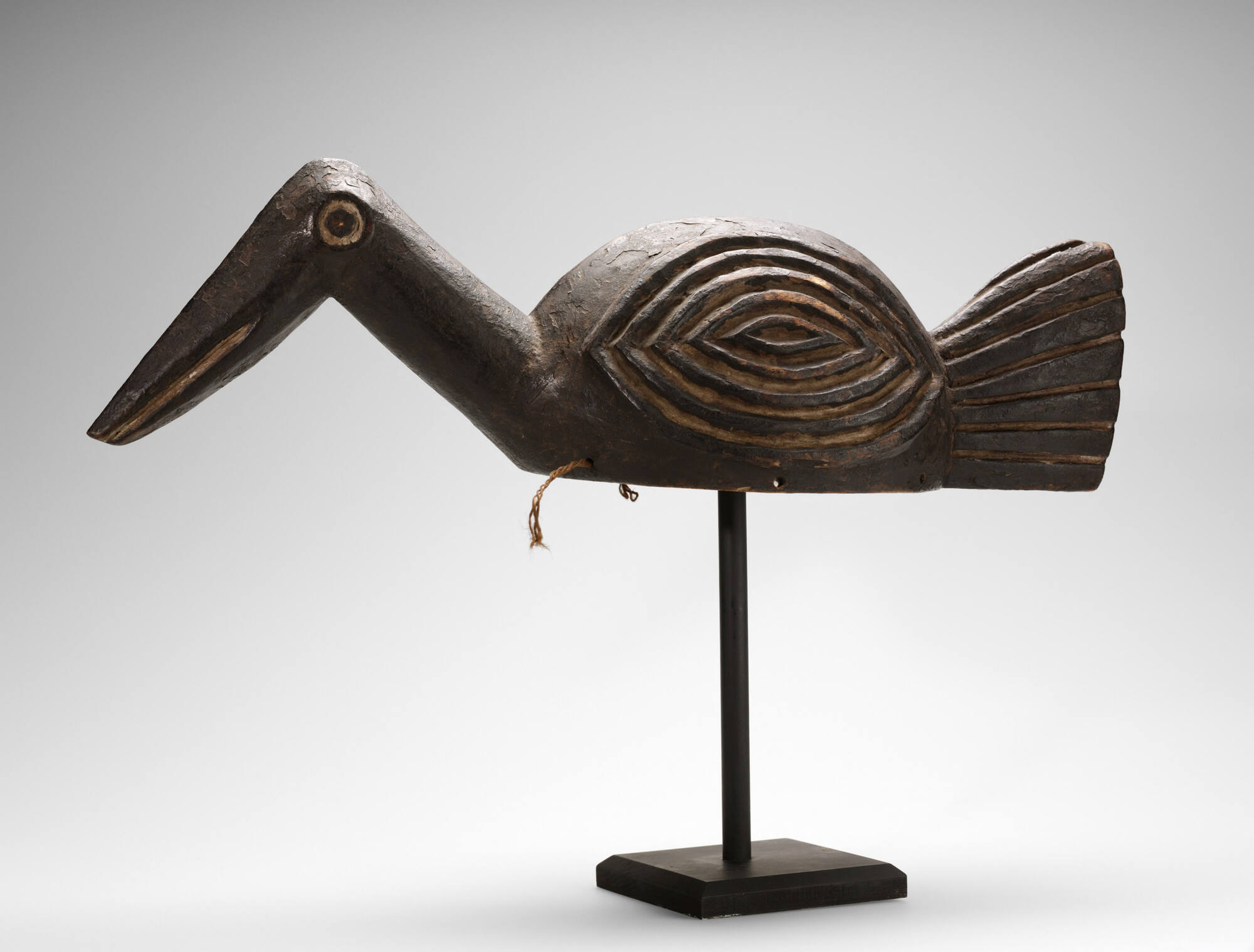
BRIEF DESCRIPTIONThis bird mask was performed along with other animal and human masks as part of spe(…)
BRIEF DESCRIPTIONThis bird mask was performed along with other animal and human masks as part of special celebrations in Cameroon.WHERE WAS IT MADE?This mask comes from the Northwestern Grassfields, an area in Cameroon. There are many small kingdoms in this region of Cameroon who have maintained close ties. Trading, gifting, and stylistic borrowing of masks and figures can make it difficult to attribute an object to a particular kingdom.HOW WAS IT MADE?Beginning with a fresh wood block, artists in the Grassfields area of Cameroon use a variety of adzes, chisels, and hammers to carve masks and other figures.HOW WAS IT USED?This bird mask is part of a larger ensemble of masks known as kum. The masquerade group consists of five to twenty-some masks depicting both people and animals, such as the buffalo, ram, chameleon, and “flying dog” or bat. Together, these masks form a group controlled by either an important lineage or a regulatory society called the Kwifoyn. The group of masks was likely produced by a single artist and danced on a single occasion, such as a funeral. The bird functions as an attendant to more prestigious masks. It appears in advance of other masks such as the powerful elephant mask. This and other masks performed in the kum masquerade were traditionally expressions of wealth and achievement; the right to perform, commission masks, and solicit performers, all required significant wealth and influence. The masquerade that features this and other masks is rarely performed today. Most masks have been sold or have decayed significantly.WHY DOES IT LOOK LIKE THIS?Rather than cover the masquerader’s face, a crest mask sits on top of his head. A fitted woven raffia net, which allows the dancer to see without being seen, conceals the dancer’s face. A loose fabric cloak or a vestment covered with chicken feathers completes the costume.To see other masks from the Grassfields area of Cameroon within the Johnson Museum’s Collection, search for object numbers 73.025.004 and 82.110.004 in the keyword search box.