






Object Details
Culture
Bozo peoples
Medium
Wood, metal, pigment, fabric, and mirror
Dimensions
11 × 17 inches (28 × 43.2 cm)
Credit Line
Gift of Dr. Leroy S. Lavine and Dorothy Lavine
Object
Number
81.086.003
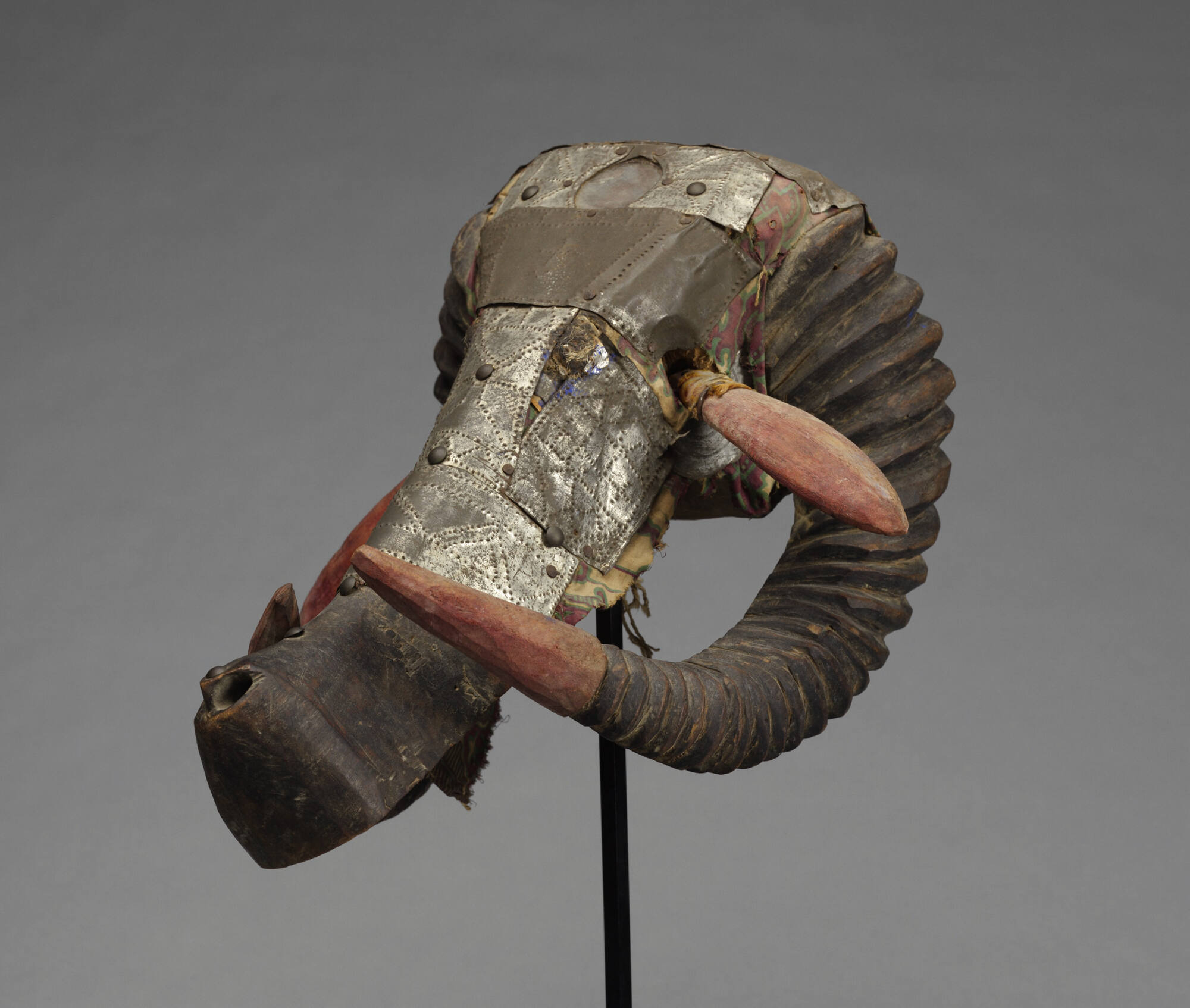
BRIEF DESCRIPTIONThis puppet head of a ram was used in a masquerade performed by the Bozo people of (…)
BRIEF DESCRIPTIONThis puppet head of a ram was used in a masquerade performed by the Bozo people of Mali. Many puppets in the masquerade, like this one, represent animals from the bush.WHERE WAS IT MADE?This puppet head was made in Mali, most likely near the Niger River, where most Bozo communities are located. The Bozo are an ethnic group, like the Bamana who are their neighbors. Both the Bamana and Bozo participate in one another’s masquerades.HOW WAS IT MADE?Blacksmiths make both the large and small puppets performed in masquerades by the Bozo and neighboring communities. Notice the patterned sheets of metal adorning the puppet’s face. Blacksmiths used repoussé metal work to create these designs. When new, the metal flashed brilliantly in the sun.HOW WAS IT USED?This puppet head was performed in a masquerade called the sogo bó. Sogo bó means “the animals come forth,” and the masquerade is associated with men who hunt. The sogo bó is performed once or twice per year and troupes perform twenty or more different characters per day during the festival.Although the rams’ head may look like a mask that could be worn by a single performer, it was actually used to head a large animal puppet that concealed 2-3 puppeteers. The animal’s long fabric back, supported by a rectangular armature, provided a stage for the performance of several small rod puppets.WHY DOES IT LOOK LIKE THIS?The ram is one among many bush animals that may perform in the sogo bò puppet masquerade drama. Other popular animals are the antelope, crocodile, lion, and hippo. The Bozo value masks that closely resemble the animals they represent. Notice the flopping red ears on the side of the puppet’s head: this lent both animation and realism to the puppet. The specific size, shape and positioning of the horns also help to identify this animal as a ram, rather than another horned animal, such as the buffalo or antelope.To see an example of a Bamana rod puppet in the Johnson Museum’s collection, search for object number 86.089.002 in the keyword search box.