


Search Result
Discover Our
Collection



“I have set before thee life and death, the blessing and the curse; therefore choose life that thou mayest lift, thou and thy seed” (Deuteronomy 30.19), from the portfolio Aliyah
Salvador Dalí, Mourlot, Paris, Wolfensburger, Zurich

The Battle of the Jerusalem Hills, from the portfolio Aliyah
Salvador Dalí, Mourlot, Paris, Wolfensburger, Zurich

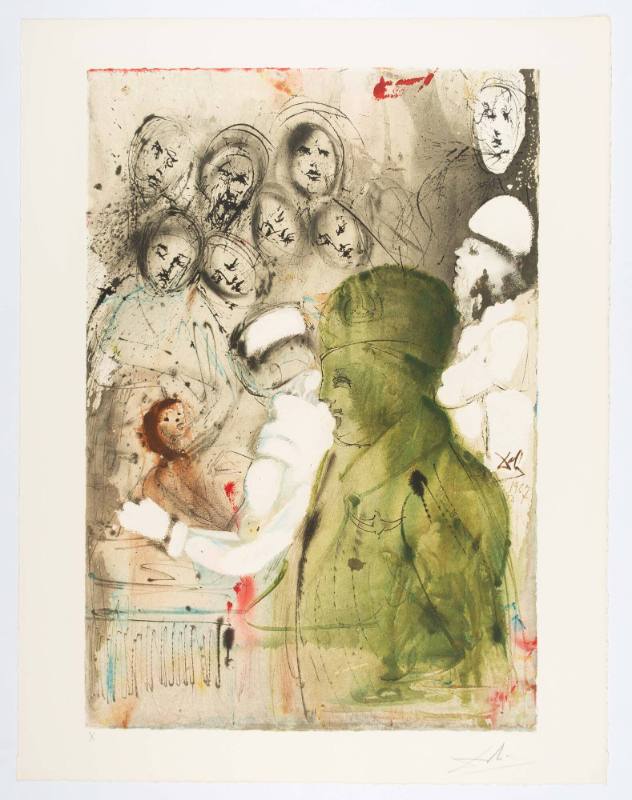
A Moment in History: David Ben Gurion reads the Declaration of Independence, May 5, 1948, from the portfolio Aliyah
Salvador Dalí, Mourlot, Paris, Wolfensburger, Zurich

Orah, Horah-Light, Joy (The menorah, the seven-branched candelabrum, is part of the official symbol of the State of Israel. The horah is the traditional Israeli folk dance,) from the portfolio Aliyah
Salvador Dalí, Mourlot, Paris, Wolfensburger, Zurich
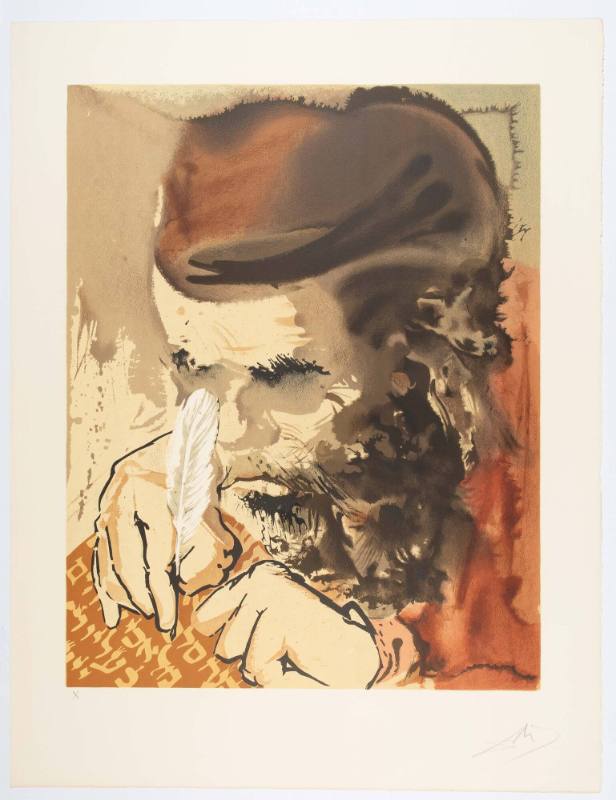
“For that is thy life and the length of thy days” (Deuteronomy 30.20), from the portfolio Aliyah
Salvador Dalí, Mourlot, Paris, Wolfensburger, Zurich

“Yea though I walk through the valley of the shadow of death I will fear no evil” (Psalm 23.4), from the portfolio Aliyah
Salvador Dalí, Mourlot, Paris, Wolfensburger, Zurich

The Pioneers of Israel: “With one of his hands wrought in the work, and with the other held his weapon” (Nehemiah 4.11), from the portfolio Aliyah
Salvador Dalí, Mourlot, Paris, Wolfensburger, Zurich
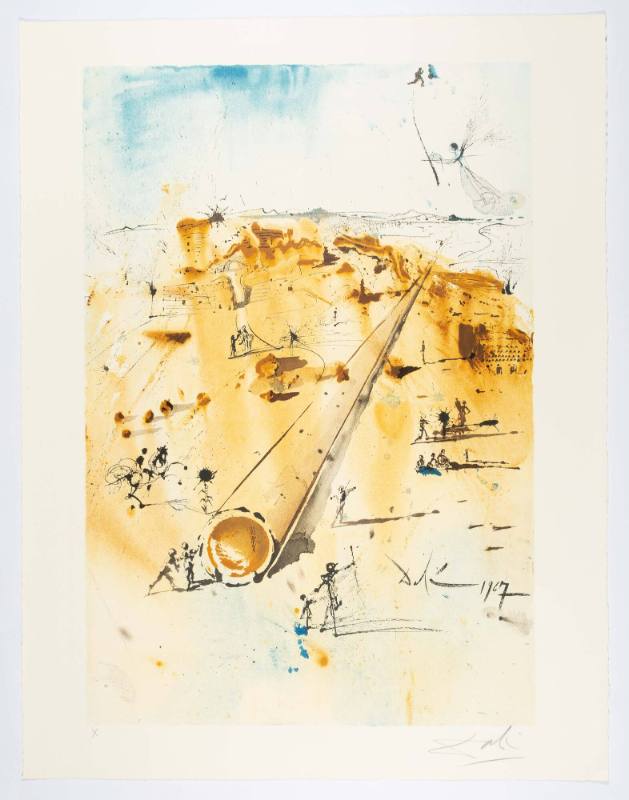
The Land at the Start of Jewish Settlement: “I will make the wilderness a pool of water” (Isaiah 41.18), from the portfolio Aliyah
Salvador Dalí, Mourlot, Paris, Wolfensburger, Zurich
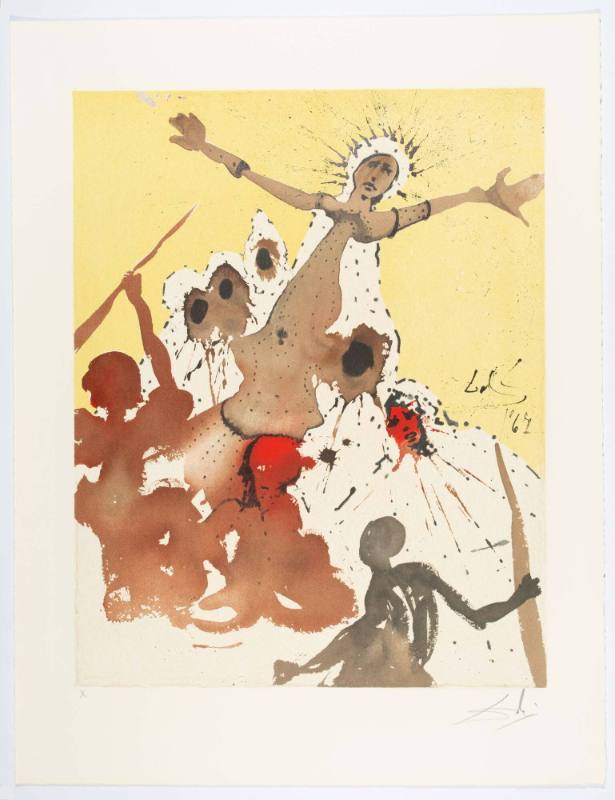
“Arise, Barak, and lead thy captivity captive, thou son of Abinoam” (Judges 5.12), from the portfolio Aliyah
Salvador Dalí, Mourlot, Paris, Wolfensburger, Zurich

“We shall go up at once and possess it” (Numbers 13.30), from the portfolio Aliyah
Salvador Dalí, Mourlot, Paris, Wolfensburger, Zurich
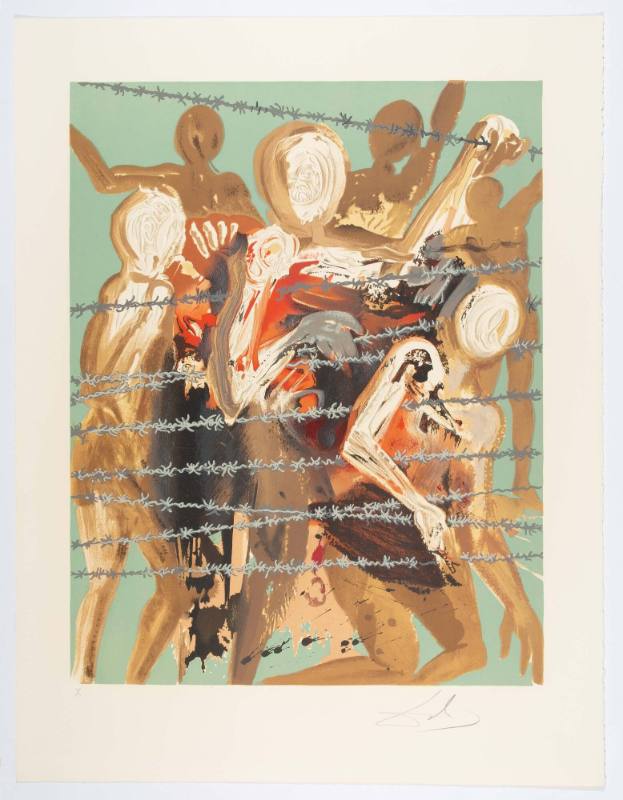

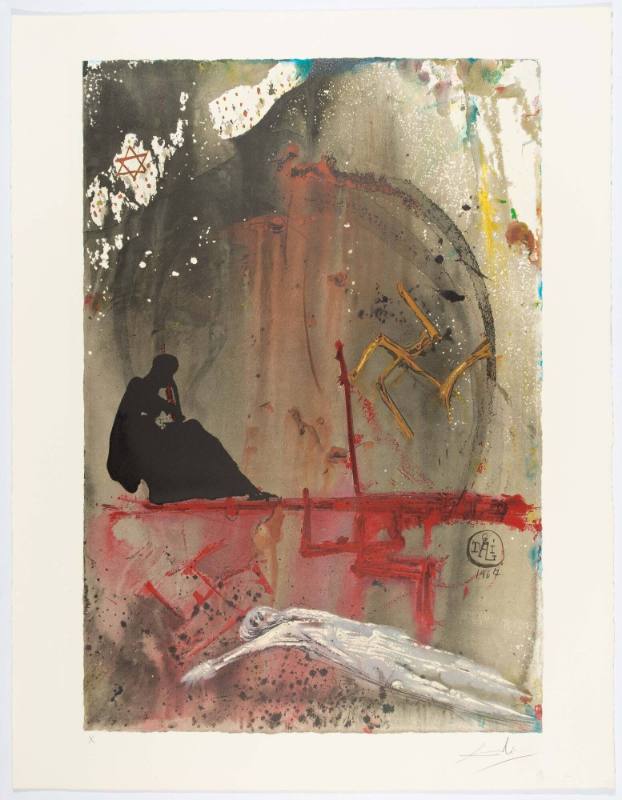
“Thou has laid me in the nethermost pit, in dark places, in the deeps” (Psalm 88.7), from the portfolio Aliyah
Salvador Dalí, Mourlot, Paris, Wolfensburger, Zurich

The Price-Bereavement, from the portfolio Aliyah
Salvador Dalí, Mourlot, Paris, Wolfensburger, Zurich
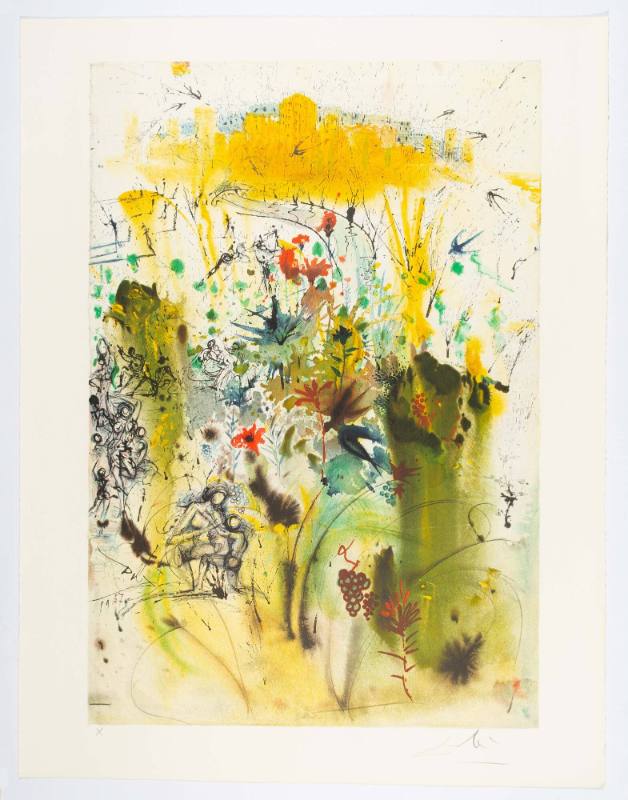
The Land Comes to Life: “The Mountains and the hills shall break forth before you into singing and all the trees of the field shall clap their hands” (Isaiah 55.12), from the portfolio Aliyah
Salvador Dalí, Mourlot, Paris, Wolfensburger, Zurich

A voice is heard in Ramah, lamentation and bitter weeping, Rachel weeping for her children; she refuseth to be comforted for her children because they are not” (Jeremiah 31.15), from the portfolio Aliyah
Salvador Dalí, Mourlot, Paris, Wolfensburger, Zurich
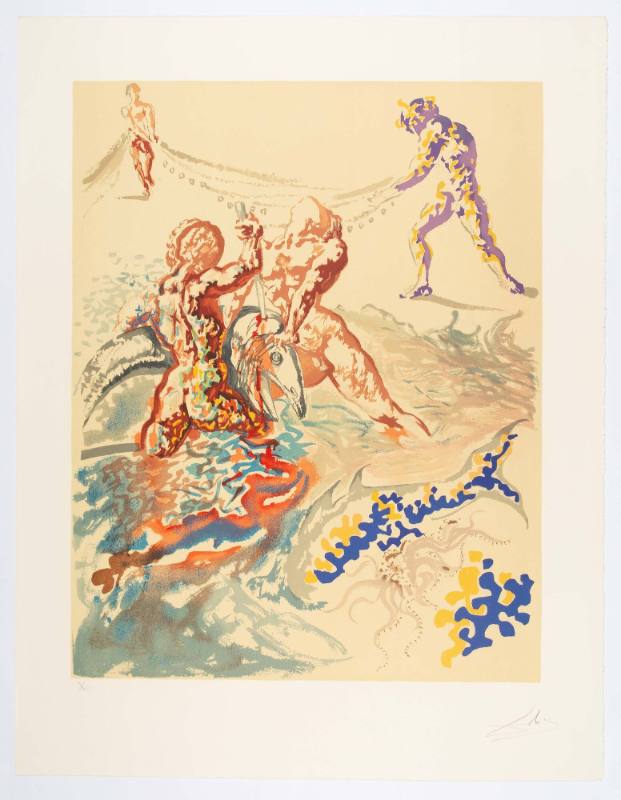
Let them have dominion over the fish of the sea and over the fowl of the air and over the cattle and over every creeping thing” (Genesis 1.26), from the portfolio Aliyah
Salvador Dalí, Mourlot, Paris, Wolfensburger, Zurich
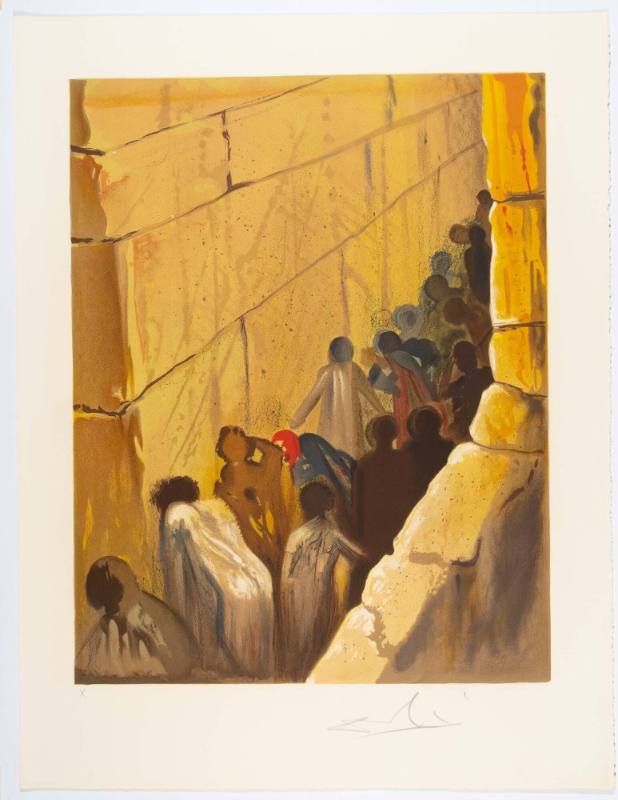

Hatikvah (Hope), the Israeli national anthem, from the portfolio Aliyah
Salvador Dalí, Mourlot, Paris, Wolfensburger, Zurich
Covenant Eternal: Circumcision, from the portfolio Aliyah
Salvador Dalí, Mourlot, Paris, Wolfensburger, Zurich


“Return O Virgin of Israel. Return to these thy cities” (Jeremiah 31.21), from the portfolio Aliyah
Salvador Dalí, Mourlot, Paris, Wolfensburger, Zurich

On the Shores of Freedom: The Eliahu Golomb brings “illegal” immigrants, from the portfolio Aliyah
Salvador Dalí, Mourlot, Paris, Wolfensburger, Zurich

Victory: A Song of the Thanksgiving, from the portfolio Aliyah
Salvador Dalí, Mourlot, Paris, Wolfensburger, Zurich





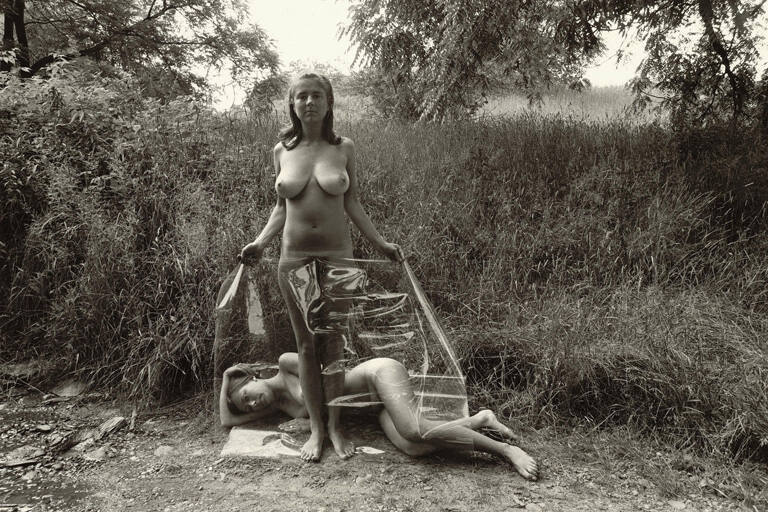
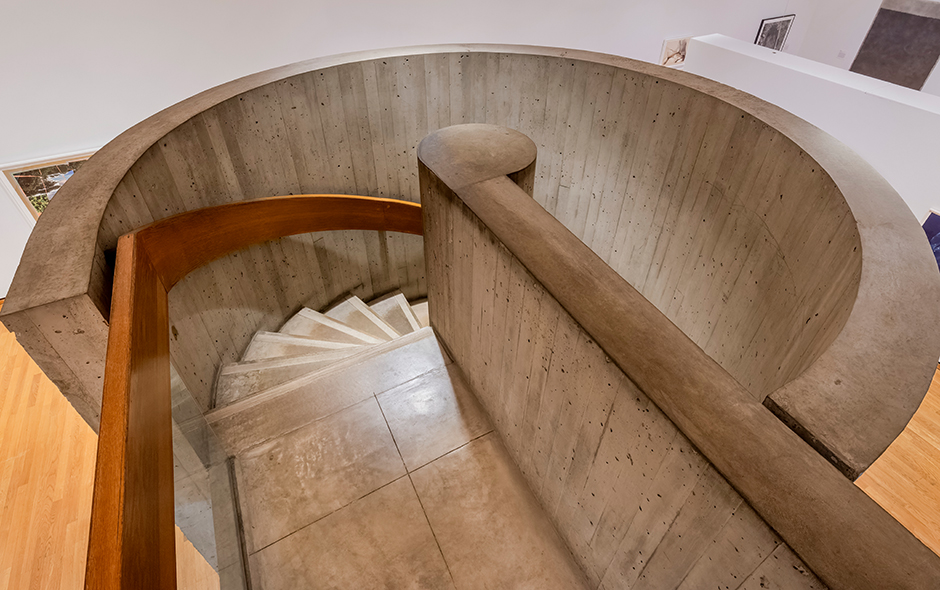
![[Stairway]]( https://emuseum.cornell.edu/internal/media/dispatcher/82952/full?key=1a8c6f31f1cd83400dfc462b7e8af9def99a34523cd060f59c1b0dc76a738e15)
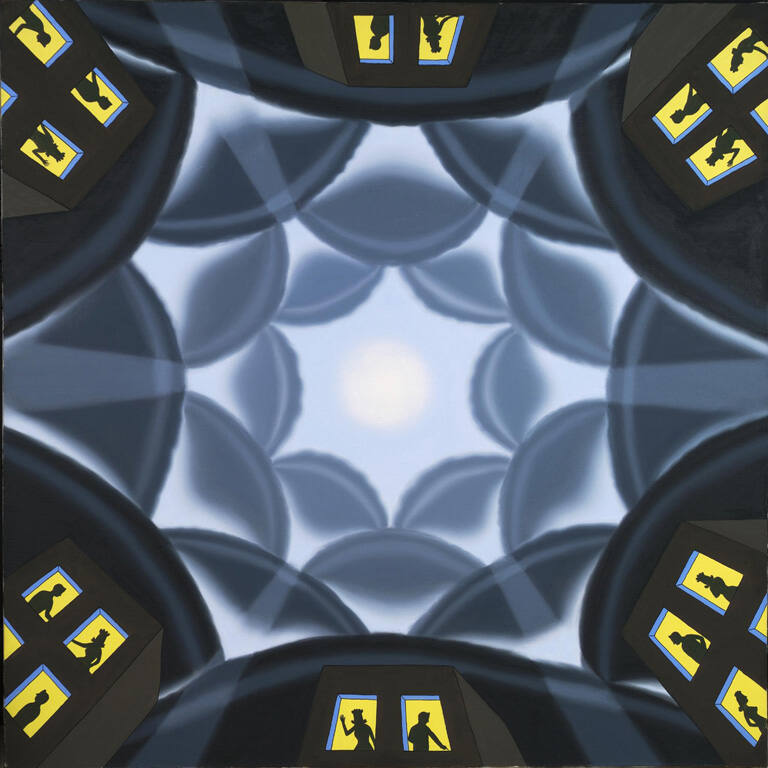
![[Concourse, Grand Central Station, New York]]( https://emuseum.cornell.edu/internal/media/dispatcher/82951/full?key=1a8c6f31f1cd83400dfc462b7e8af9def99a34523cd060f59c1b0dc76a738e15)

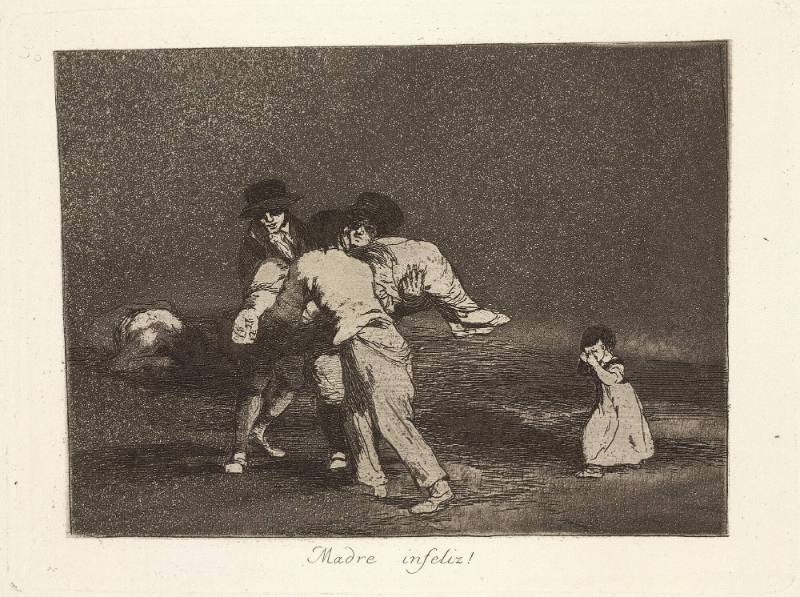
Madre infeliz! (Unhappy mother!), Plate 50 of “The Disasters of War”
Francisco José de Goya, Real Academia de Bellas Artes de San Fernando

Extraña devocion! (Strange devotion!), Plate 66 of “The Disasters of War”
Francisco José de Goya, Real Academia de Bellas Artes de San Fernando

Que locura! (What madness!), Plate 68 of “The Disasters of War”
Francisco José de Goya, Real Academia de Bellas Artes de San Fernando

Bien te se está (It serves you right), Plate 6 of “The Disasters of War”
Francisco José de Goya, Real Academia de Bellas Artes de San Fernando

Siempre Sucede (This always happens), Plate 8 of “The Disasters of War”
Francisco José de Goya, Real Academia de Bellas Artes de San Fernando
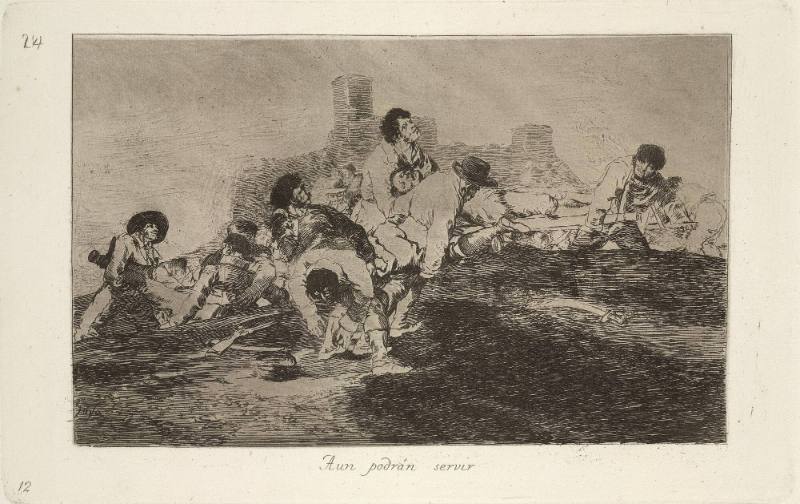
Aun podrán servir (They’ll still be useful), Plate 24 of “The Disasters of War”
Francisco José de Goya, Real Academia de Bellas Artes de San Fernando

Todo va revuelto (Everything is topsy-turvy), Plate 42 of “The Disasters of War”
Francisco José de Goya, Real Academia de Bellas Artes de San Fernando
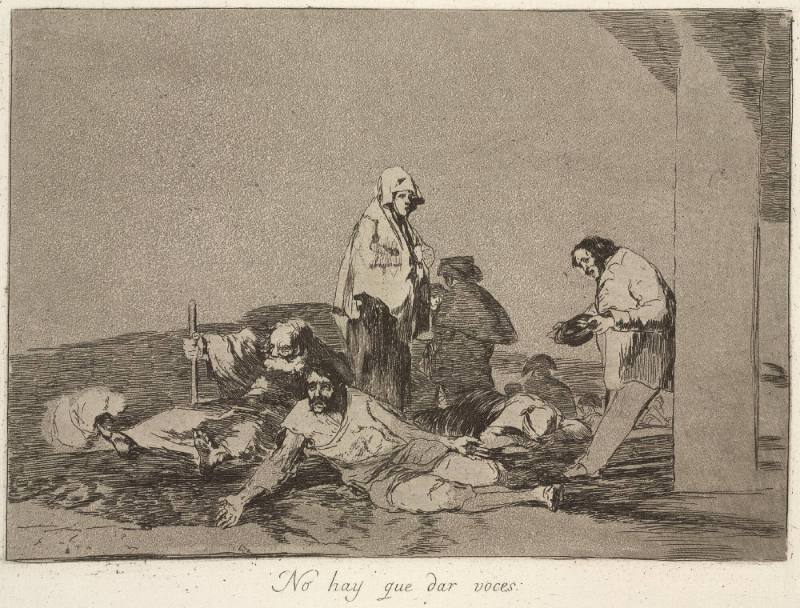
No hay que dar voces (It is no use shouting), Plate 58 of “The Disasters of War”
Francisco José de Goya, Real Academia de Bellas Artes de San Fernando
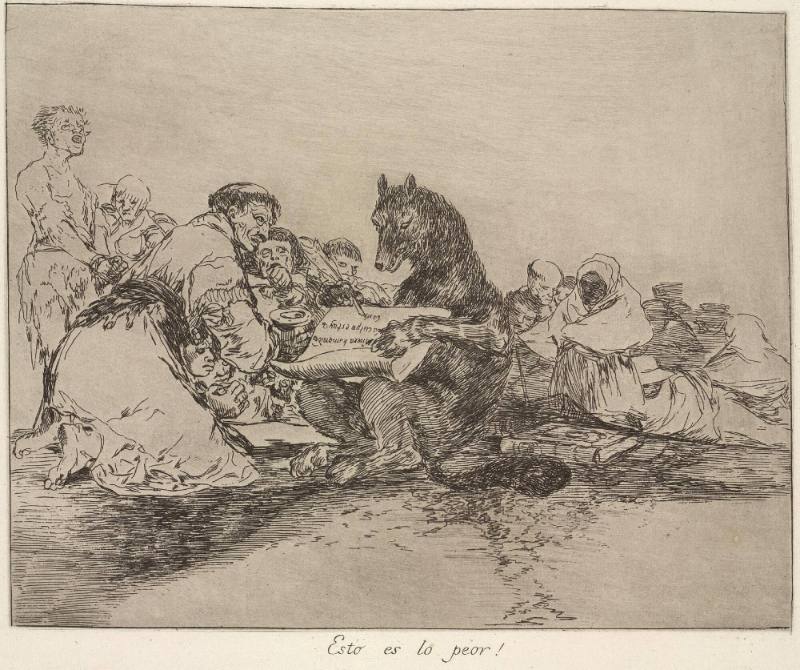
Esto és lo peor (This is the absolute worst), Plate 74 of “The Disasters of War”
Francisco José de Goya, Real Academia de Bellas Artes de San Fernando

El buitre carnívoro (The carniverous vulture), Plate 76 of “The Disasters of War”
Francisco José de Goya, Real Academia de Bellas Artes de San Fernando
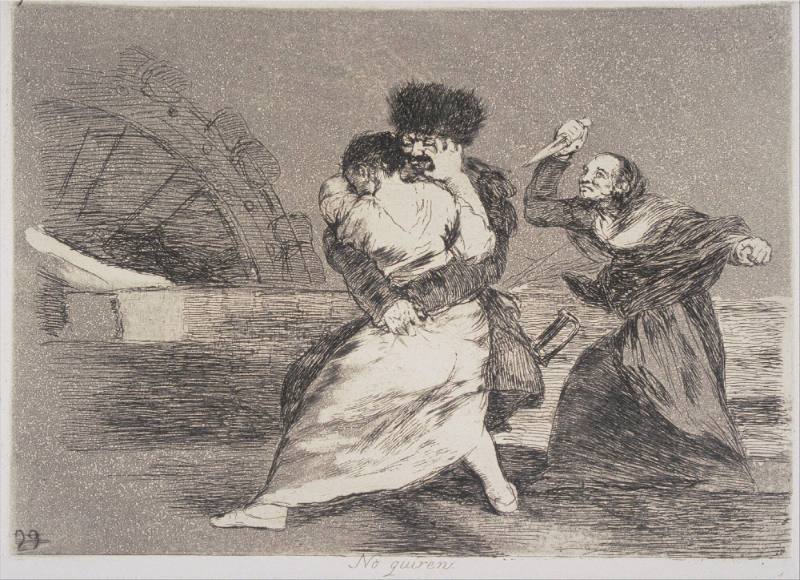
No quieran (They do not want to), Plate 9 of “The Disasters of War”
Francisco José de Goya, Real Academia de Bellas Artes de San Fernando

Tambies estos (So will these), Plate 25 of “The Disasters of War”
Francisco José de Goya, Real Academia de Bellas Artes de San Fernando

No se puede mirar (One cannot look at this), Plate 26 of “The Disasters of War”
Francisco José de Goya, Real Academia de Bellas Artes de San Fernando

Algun partido saca (There is something to be gained), Plate 40 of “The Disasters of War”
Francisco José de Goya, Real Academia de Bellas Artes de San Fernando

Al cementerio (To the cemetery), Plate 56 of “The Disasters of War”
Francisco José de Goya, Real Academia de Bellas Artes de San Fernando

Gatesca pantomima (Feline pantomime), Plate 73 of “The Disasters of War”
Francisco José de Goya, Real Academia de Bellas Artes de San Fernando
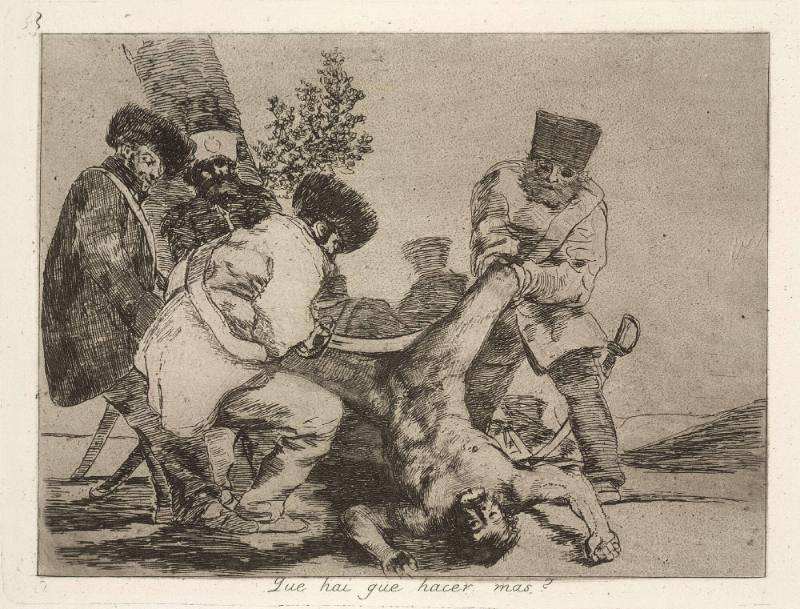
Qué hai que hacer mas? (What more can one do?), Plate 33 of “The Disasters of War”
Francisco José de Goya, Real Academia de Bellas Artes de San Fernando
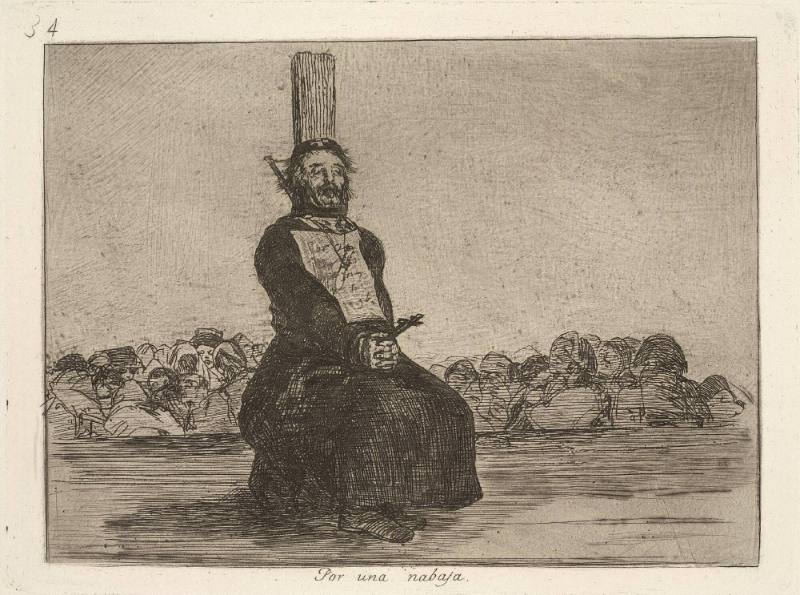
Por una nabaja (On account of a knife), Plate 34 of “The Disasters of War”
Francisco José de Goya, Real Academia de Bellas Artes de San Fernando

Y son fieras (And they are like wild beasts), Plate 5 of “The Disasters of War”
Francisco José de Goya, Real Academia de Bellas Artes de San Fernando

Si resucitará? (Will she live again?), Plate 80 of “The Disasters of War”
Francisco José de Goya, Real Academia de Bellas Artes de San Fernando

Duro es el Paso! (It’s a hard step), Plate 14 of “The Disasters of War”
Francisco José de Goya, Real Academia de Bellas Artes de San Fernando
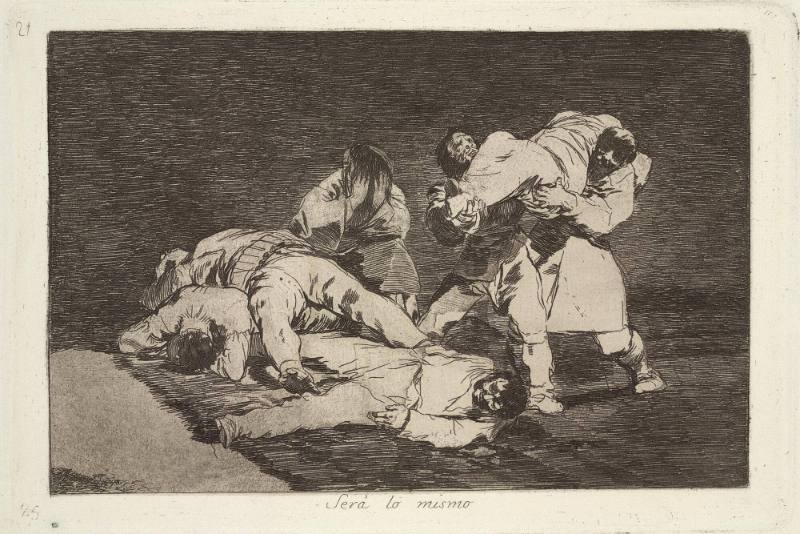
Será lo mismo (It will be the same), Plate 21 of “The Disasters of War”
Francisco José de Goya, Real Academia de Bellas Artes de San Fernando

No se puede saber por qué (Nobody knows why), Plate 35 of “The Disasters of War”
Francisco José de Goya, Real Academia de Bellas Artes de San Fernando
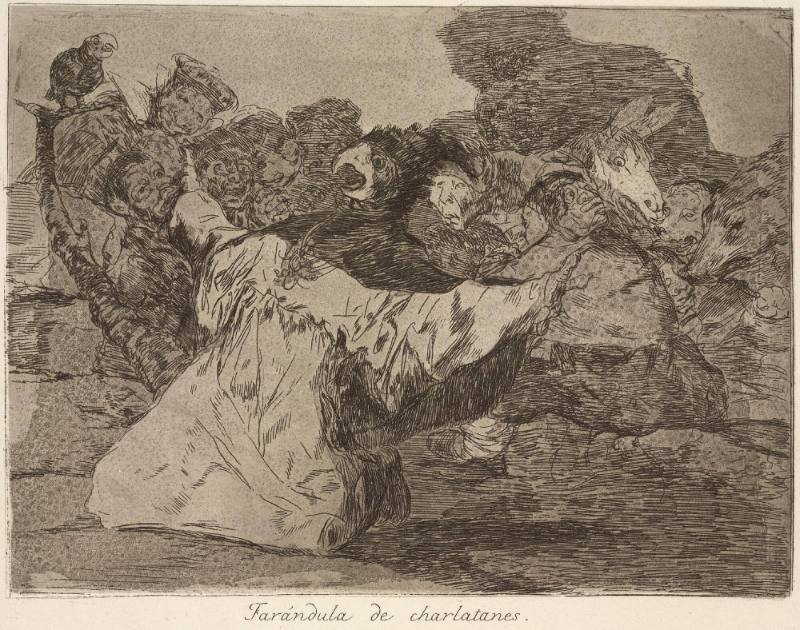
Farándula de charlantenes (Troupe of Charlatans), Plate 75 of “The Disasters of War”
Francisco José de Goya, Real Academia de Bellas Artes de San Fernando

Se aprovechan (They avail themselves), Plate #16 to The Disasters of War., 1863
Francisco José de Goya, Real Academia de Bellas Artes de San Fernando

Fuerte cosa es! (This is too much!), Plate 31 of “The Disasters of War”
Francisco José de Goya, Real Academia de Bellas Artes de San Fernando
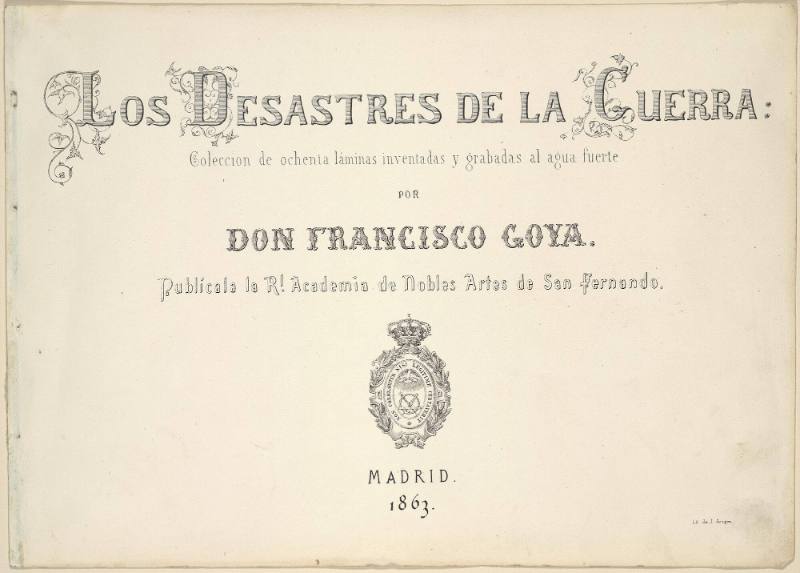
Title Page: English translation of “The Disasters of War”
Francisco José de Goya, Real Academia de Bellas Artes de San Fernando
introduction (in spanish) to the original edition of “The Disasters of War”
Francisco José de Goya, Real Academia de Bellas Artes de San Fernando

Tristes Presentimientos de lo Que ha de Acontecer (Sad Presentments of what must come to pass), Plate 1 of “The Disasters of War”
Francisco José de Goya, Real Academia de Bellas Artes de San Fernando

Caridad de una muger (A woman’s charity), Plate 49 of “The Disasters of War”
Francisco José de Goya, Real Academia de Bellas Artes de San Fernando

Gracias á la almorta (Thanks to the millet), Plate 51 of “The Disasters of War”
Francisco José de Goya, Real Academia de Bellas Artes de San Fernando
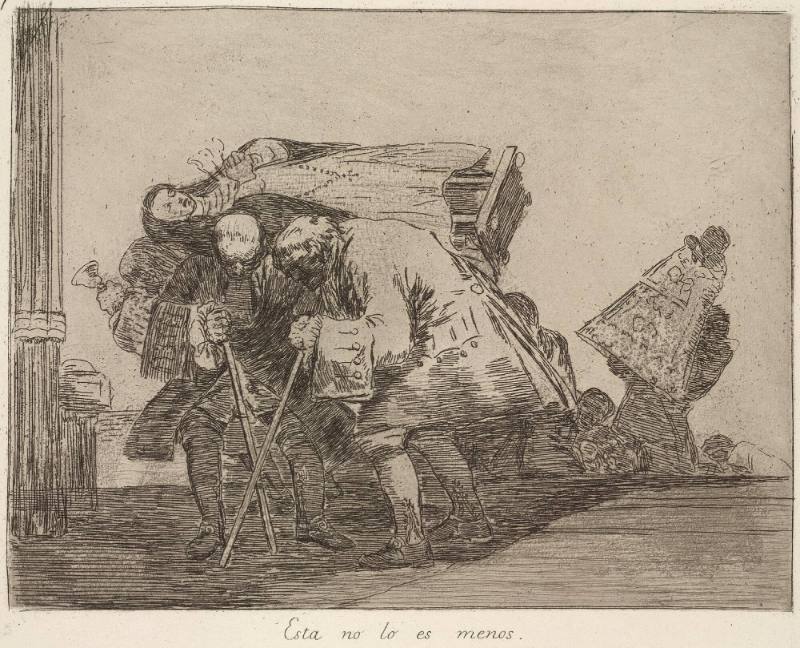
Esta no lo es menos (This is no less curious), Plate 67 of “The Disasters of War”
Francisco José de Goya, Real Academia de Bellas Artes de San Fernando
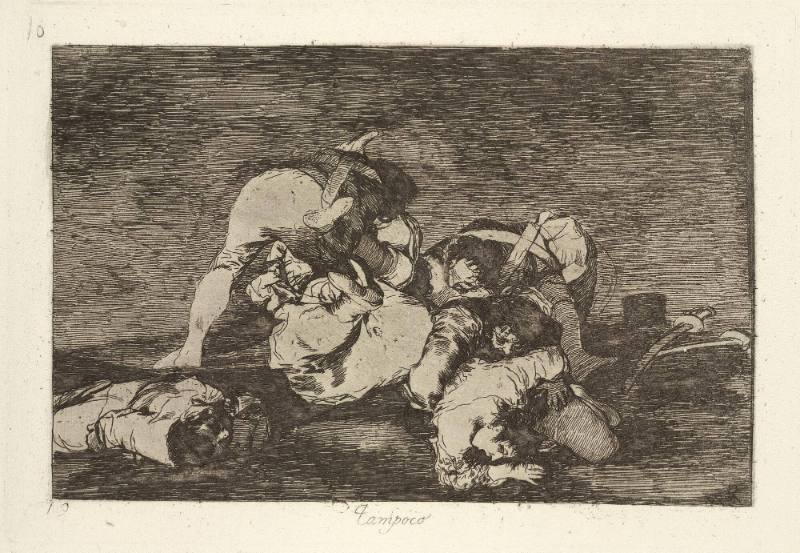
Tampoco (Nor do these), Plate 10 of “The Disasters of War”
Francisco José de Goya, Real Academia de Bellas Artes de San Fernando

Para eso habeis nacido (This is what you were born for), Plate 12 of “The Disasters of War”
Francisco José de Goya, Real Academia de Bellas Artes de San Fernando

Populacho (Rabble), Plate 28 of “The Disasters of War”
Francisco José de Goya, Real Academia de Bellas Artes de San Fernando
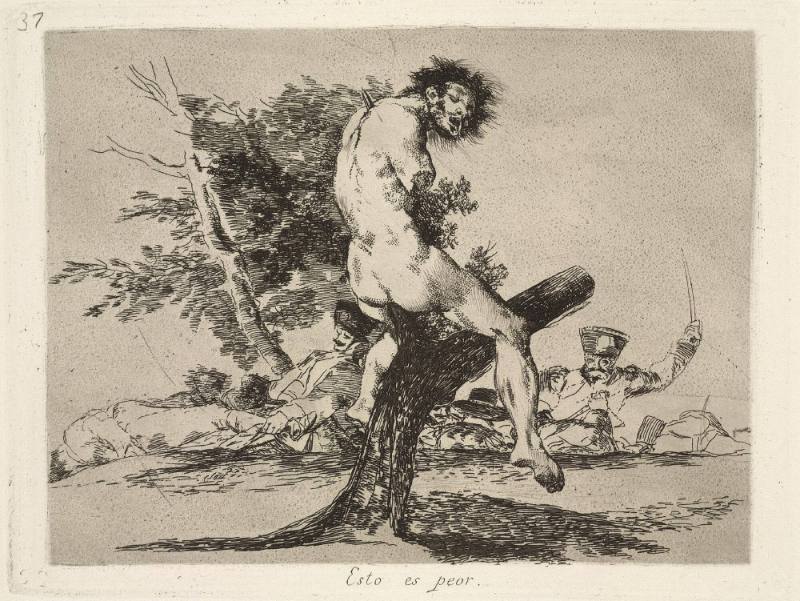
Esto es peor (This is worse), Plate 37 of “The Disasters of War”
Francisco José de Goya, Real Academia de Bellas Artes de San Fernando

Grande Hazaña! Con Muertos! (Great deeds – against the dead!), Plate 39 of “The Disasters of War”
Francisco José de Goya, Real Academia de Bellas Artes de San Fernando

Espiró sin remedio (There was nothing to be done and he died), Plate 53 of “The Disasters of War”
Francisco José de Goya, Real Academia de Bellas Artes de San Fernando