


Search Result
Discover Our
Collection

The Parable of the Bad Rich Man, from a Collection of Parables
Crispijn van de Passe the Elder, after Maarten de Vos

The Unworthy Guest expelled from the House of the King, from a Collection of Parables
Crispijn van de Passe the Elder, after Maarten de Vos


The Parable of the Workers in the Vineyard, from a Collection of Parables
Crispijn van de Passe the Elder

The Parable of the Unforgiving Servant, from a Collection of Parables
Crispijn van de Passe the Elder


The Parable of the Grain thrown on Different Soils, from a Collection of Parables
Crispijn van de Passe the Elder


Crossing the Rhine in the Presence of the Enemy, 1672), Plate 4 from the series “The Hall of Mirrors at Versailles”
Dupuis the Elder, Johann Martin Preisler, after Jean-Baptiste Massé, after Charles Le Brun


The Siege of Ypres, plate 118 from Der weiss Kunig, The Emperor Maximilian I and His Ancestors
Hans Burgkmair the elder


An unidentifed scene from Der weiss Kunig, The Emperor Maximilian I and His Ancestors
Hans Burgkmair the elder


Portrait of Elizabeth Charlotte of Bavaria, Duchess of Orleans
Nicolas Bazin, after Jean-Baptiste Martin the Elder

Engravings
Jacques Callot, Stefano della Bella, Sébastien Le Clerc, the elder, Claude Lorrain, Claude Mellan, Belman, Laeguel, Pierre Giffart, Pierre Landry, Perelle, Gérard Edelinck


Design for a Ceiling (Entwurff eines Plaffond), plate 16 from Decker’s Architectura Civilis
Johann Daniel Herz the younger, after Paul Decker the Elder

Memorial Commemorating the victories of Leopold I, Joseph I, and Charles VI of Austria, and the Treaties of Rastatt and Baden, plate 56 from Decker’s Architectura Civilis
after Paul Decker the Elder


Château with parterre and figures strolling the grounds (Plate 1 from a series of landscapes)
Sébastien Le Clerc, the elder


Ship with Three Masts Armed with Four Side Guns Sailing to the Starboard (with the Fall of Icarus)
Frans Huys, Pieter Bruegel the elder


Christ on the Cross between the Thieves, from Twenty-six Scenes from the Passion of Christ
Urs Graf the Elder


Que se rompe la cuerda (May the rope break), Plate 77 of “The Disasters of War”
Francisco José de Goya, Real Academia de Bellas Artes de San Fernando

Lo mismo en otras partes (The same thing elsewhere), Plate 23 of “The Disasters of War”
Francisco José de Goya, Real Academia de Bellas Artes de San Fernando
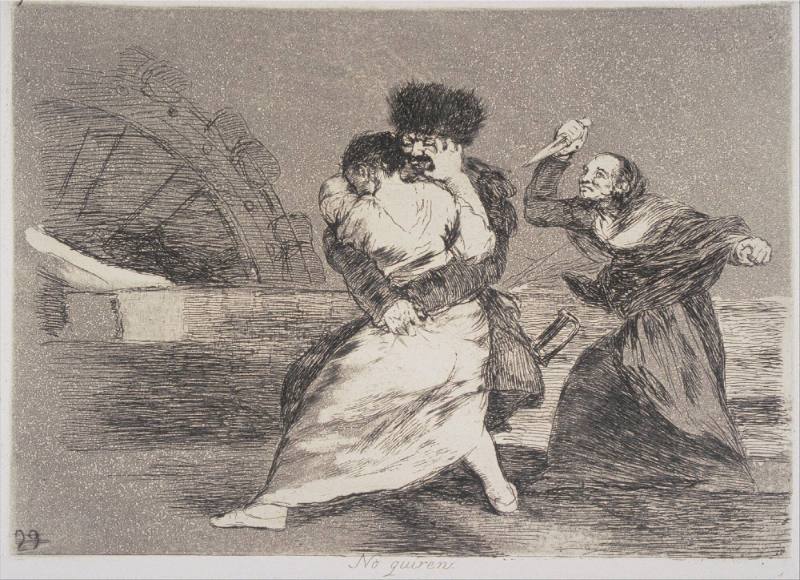
No quieran (They do not want to), Plate 9 of “The Disasters of War”
Francisco José de Goya, Real Academia de Bellas Artes de San Fernando

Tambies estos (So will these), Plate 25 of “The Disasters of War”
Francisco José de Goya, Real Academia de Bellas Artes de San Fernando

No se puede mirar (One cannot look at this), Plate 26 of “The Disasters of War”
Francisco José de Goya, Real Academia de Bellas Artes de San Fernando

Algun partido saca (There is something to be gained), Plate 40 of “The Disasters of War”
Francisco José de Goya, Real Academia de Bellas Artes de San Fernando

Al cementerio (To the cemetery), Plate 56 of “The Disasters of War”
Francisco José de Goya, Real Academia de Bellas Artes de San Fernando

Gatesca pantomima (Feline pantomime), Plate 73 of “The Disasters of War”
Francisco José de Goya, Real Academia de Bellas Artes de San Fernando

Bien te se está (It serves you right), Plate 6 of “The Disasters of War”
Francisco José de Goya, Real Academia de Bellas Artes de San Fernando

Siempre Sucede (This always happens), Plate 8 of “The Disasters of War”
Francisco José de Goya, Real Academia de Bellas Artes de San Fernando
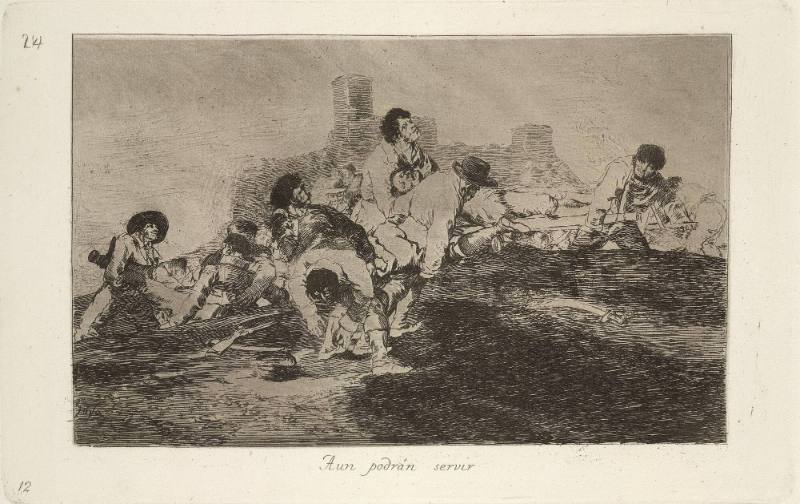
Aun podrán servir (They’ll still be useful), Plate 24 of “The Disasters of War”
Francisco José de Goya, Real Academia de Bellas Artes de San Fernando

Todo va revuelto (Everything is topsy-turvy), Plate 42 of “The Disasters of War”
Francisco José de Goya, Real Academia de Bellas Artes de San Fernando
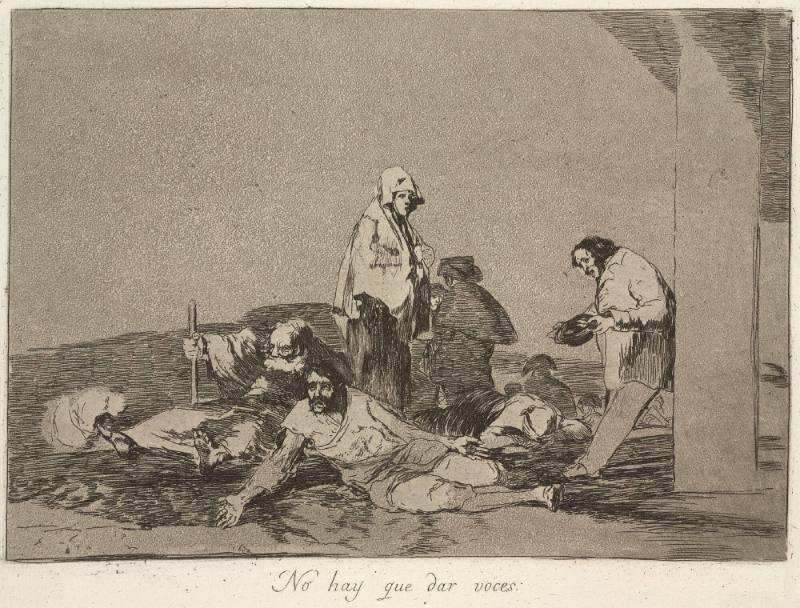
No hay que dar voces (It is no use shouting), Plate 58 of “The Disasters of War”
Francisco José de Goya, Real Academia de Bellas Artes de San Fernando
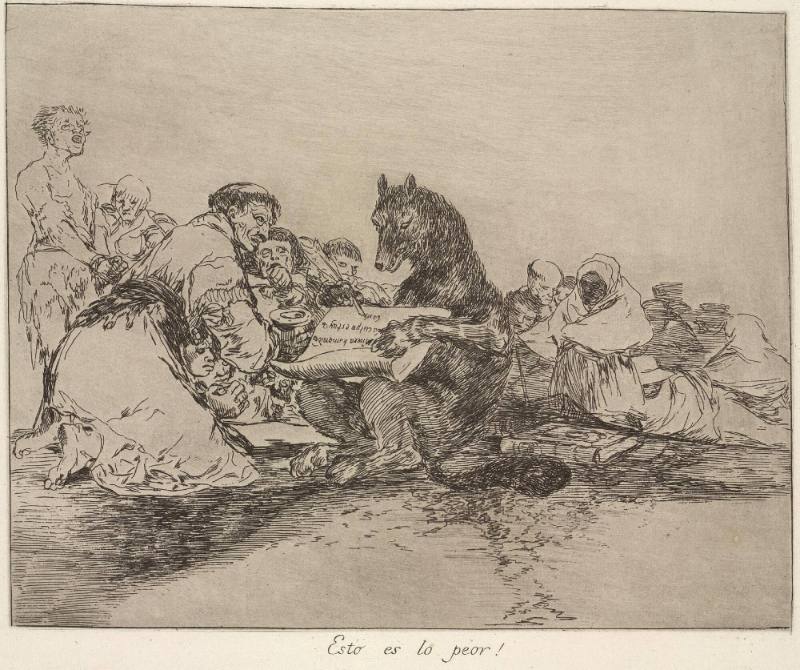
Esto és lo peor (This is the absolute worst), Plate 74 of “The Disasters of War”
Francisco José de Goya, Real Academia de Bellas Artes de San Fernando

El buitre carnívoro (The carniverous vulture), Plate 76 of “The Disasters of War”
Francisco José de Goya, Real Academia de Bellas Artes de San Fernando
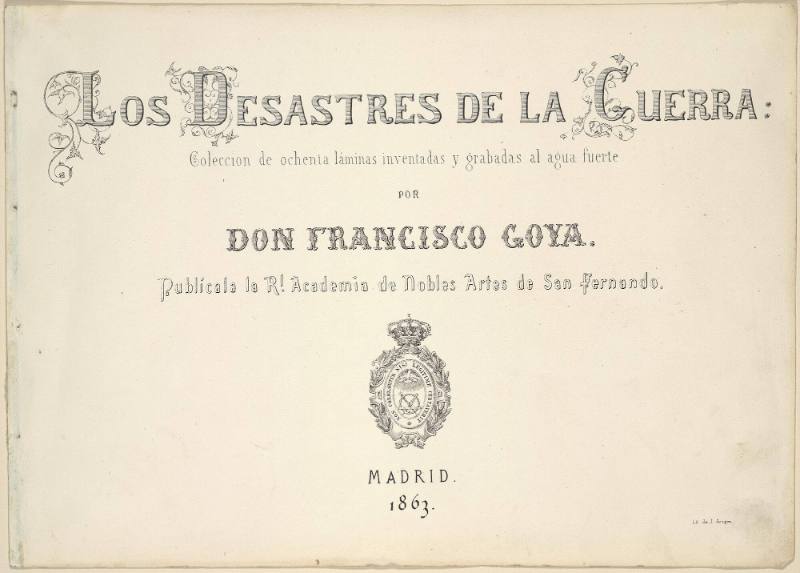
Title Page: English translation of “The Disasters of War”
Francisco José de Goya, Real Academia de Bellas Artes de San Fernando

Y no hai remedio (And it can’t be helped), Plate 15 of “The Disasters of War”
Francisco José de Goya, Real Academia de Bellas Artes de San Fernando

Por Qué? (Why?), Plate 32 of “The Disasters of War”
Francisco José de Goya, Real Academia de Bellas Artes de San Fernando

Caridad de una muger (A woman’s charity), Plate 49 of “The Disasters of War”
Francisco José de Goya, Real Academia de Bellas Artes de San Fernando

Gracias á la almorta (Thanks to the millet), Plate 51 of “The Disasters of War”
Francisco José de Goya, Real Academia de Bellas Artes de San Fernando
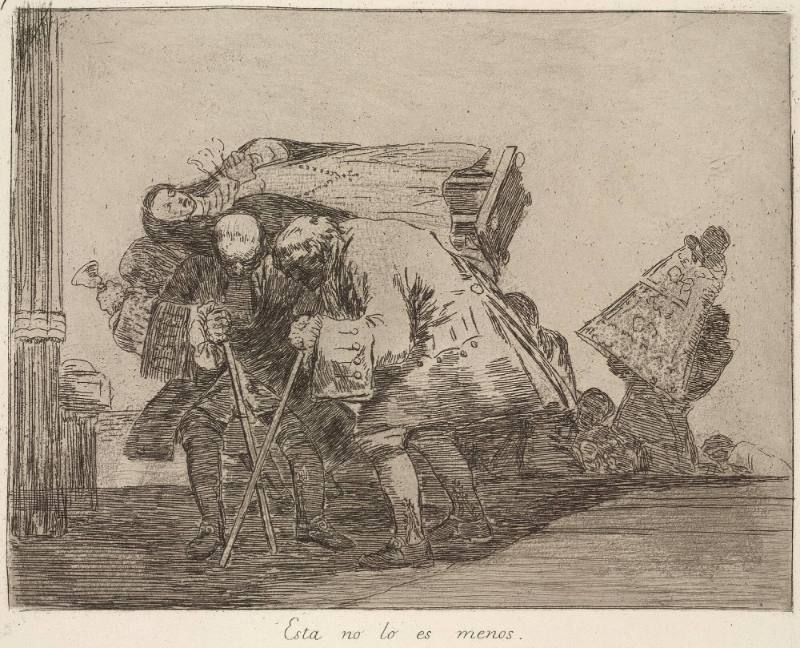
Esta no lo es menos (This is no less curious), Plate 67 of “The Disasters of War”
Francisco José de Goya, Real Academia de Bellas Artes de San Fernando
introduction (in spanish) to the original edition of “The Disasters of War”
Francisco José de Goya, Real Academia de Bellas Artes de San Fernando

Tristes Presentimientos de lo Que ha de Acontecer (Sad Presentments of what must come to pass), Plate 1 of “The Disasters of War”
Francisco José de Goya, Real Academia de Bellas Artes de San Fernando

Enterrar y callar (Bury them and keep quiet), Plate 18 of “The Disasters of War”, 1863
Francisco José de Goya, Real Academia de Bellas Artes de San Fernando